Pick your grade
Eastbound or Westbound: Which Way Should You Ride the GAP?
Direction is the first real decision of any GAP trip, and the internet argues about it constantly. The honest answer comes down to one mountain and where you want it in your story.
C&O Canal & Thru-Rides · 5 min read ·
The Question Every GAP Planner Asks
Start in Pittsburgh and finish in Cumberland, or the reverse? Forums treat this as settled science, citing prevailing winds, elevation profiles, and train schedules with equal confidence. Strip away the folklore and you're left with two genuine factors — the grade and your logistics — plus one fake factor that refuses to die. Let's dispatch the fake one first.
The Wind Myth, Retired
You'll read that westerly winds favor eastbound riders, and over a continent that's roughly how weather moves. On the trail itself, the claim mostly evaporates. The GAP spends its miles in river valleys and forest corridor, sheltered from any consistent airflow, and the day-to-day weather system overhead matters enormously more than the climatological average. Ask ten thru-riders about wind and you'll hear ten contradictory reports from the same week.
Plan around the forecast for your actual dates, not around a compass-rose theory. Wind should decide nothing about your direction.
The Grade Is the Real Argument
Here's the geometry that matters. The GAP's summit is the Eastern Continental Divide, up in the high country near Frostburg. Approached from the Pittsburgh side, the climb spreads across many gentle miles — most riders barely register it as climbing. Approached from Cumberland, the same elevation compresses into a sustained pull: the first 16 trail miles out of Canal Place climb continuously to Frostburg, with the Divide beyond. Still never steep — this is railroad grade — but unmistakably uphill, for hours.
Flip that around and you see the prize: ride toward Cumberland and those miles become one of the longest freewheeling descents on any American rail-trail, a sustained coast off the mountain with the valley opening below you.
The Case for Each Direction
Both choices are defensible. What you're really choosing is where the mountain sits in your trip's narrative.
- Eastbound (Pittsburgh → Cumberland): the climb arrives gradually and late, the finale is the big descent, and thru-riders continuing to DC roll straight onto the C&O with gravity's gift still in their legs.
- Westbound (Cumberland → Pittsburgh): you face the mountain on day one with fresh legs, get the hardest work done first, and spend the rest of the trip on gentle downgrades and flats.
- Either direction: breaking the mountain section with a night in Frostburg turns the grade from an ordeal into two easy halves.
- Climb-skippers: the Bike Train carries riders and bikes from Cumberland up to Frostburg for $45–49, which neutralizes the westbound direction's biggest cost.
Our Verdict, With Its Trade-Offs
Ride eastbound. Finishing with the descent into Cumberland is simply the better story, and for Pittsburgh-to-DC riders it sequences the trip correctly — smooth limestone first, rougher towpath second, momentum at the handoff. The trade-off is honest: your final GAP day starts with the last of the climbing, and westbound riders get their suffering over earlier. If you'd rather front-load the work, westbound is a perfectly good trip; it's just the minority choice for a reason.
Whichever way you point, the deeper directional planning for the full route lives at tunnelhotel.com/washington-dc-to-pittsburgh and tunnelhotel.com/gap-trail-from-pittsburgh.
Put a Bed at the Top of the Grade
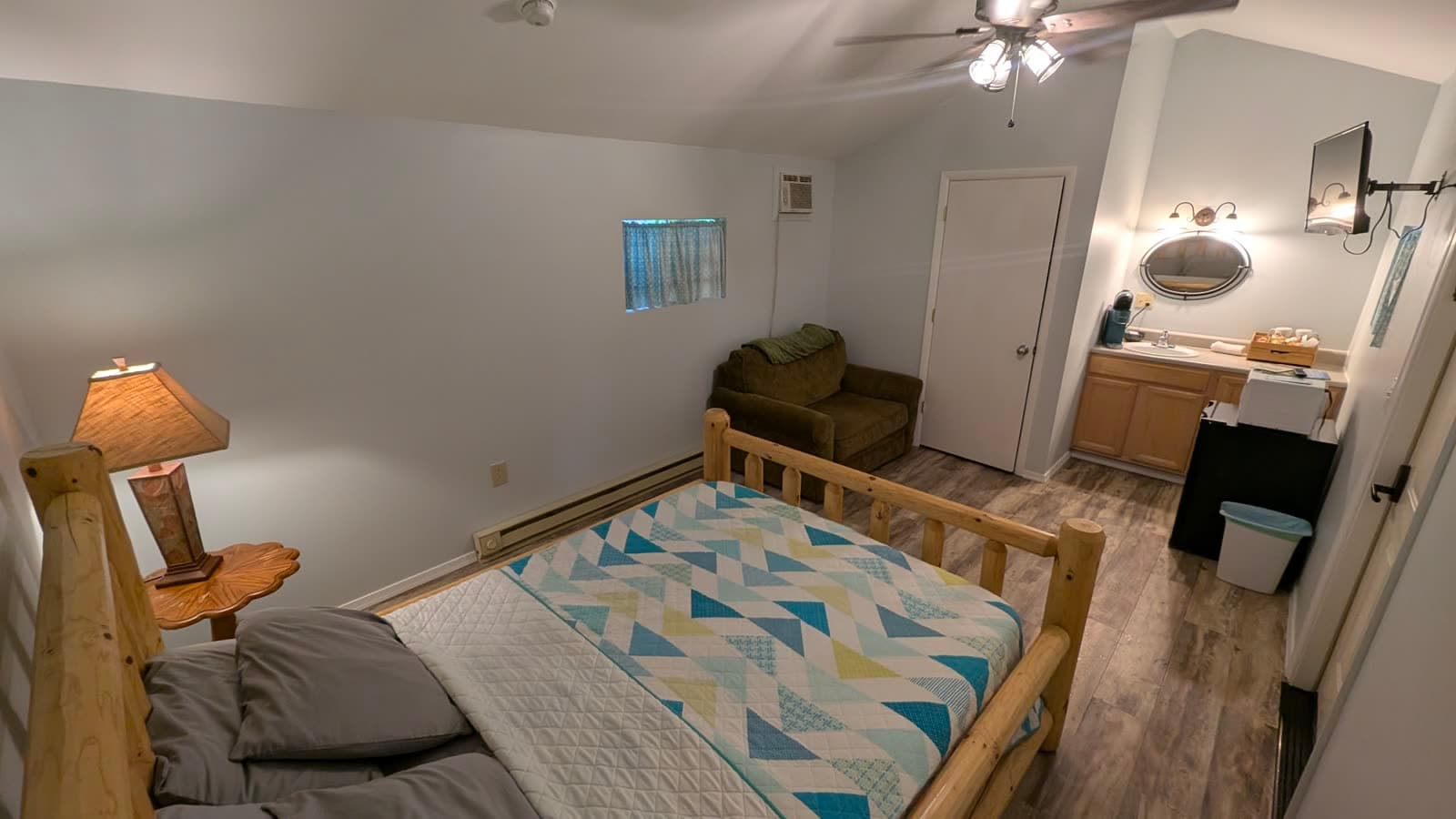
Both directions share one smart move: sleep where the climbing ends. Our 1888 inn stands beside the rails in Frostburg — eastbound riders arrive with the descent saved for morning coffee; westbound riders arrive with the worst of the mountain already behind them. A queen here is $79.79 to start, and that figure is the whole figure, lodging tax included. Hold your night at tunnelhotel.com/book and let the grade work for you instead of against you.
Beds 300 yards off the trail
All rooms & camping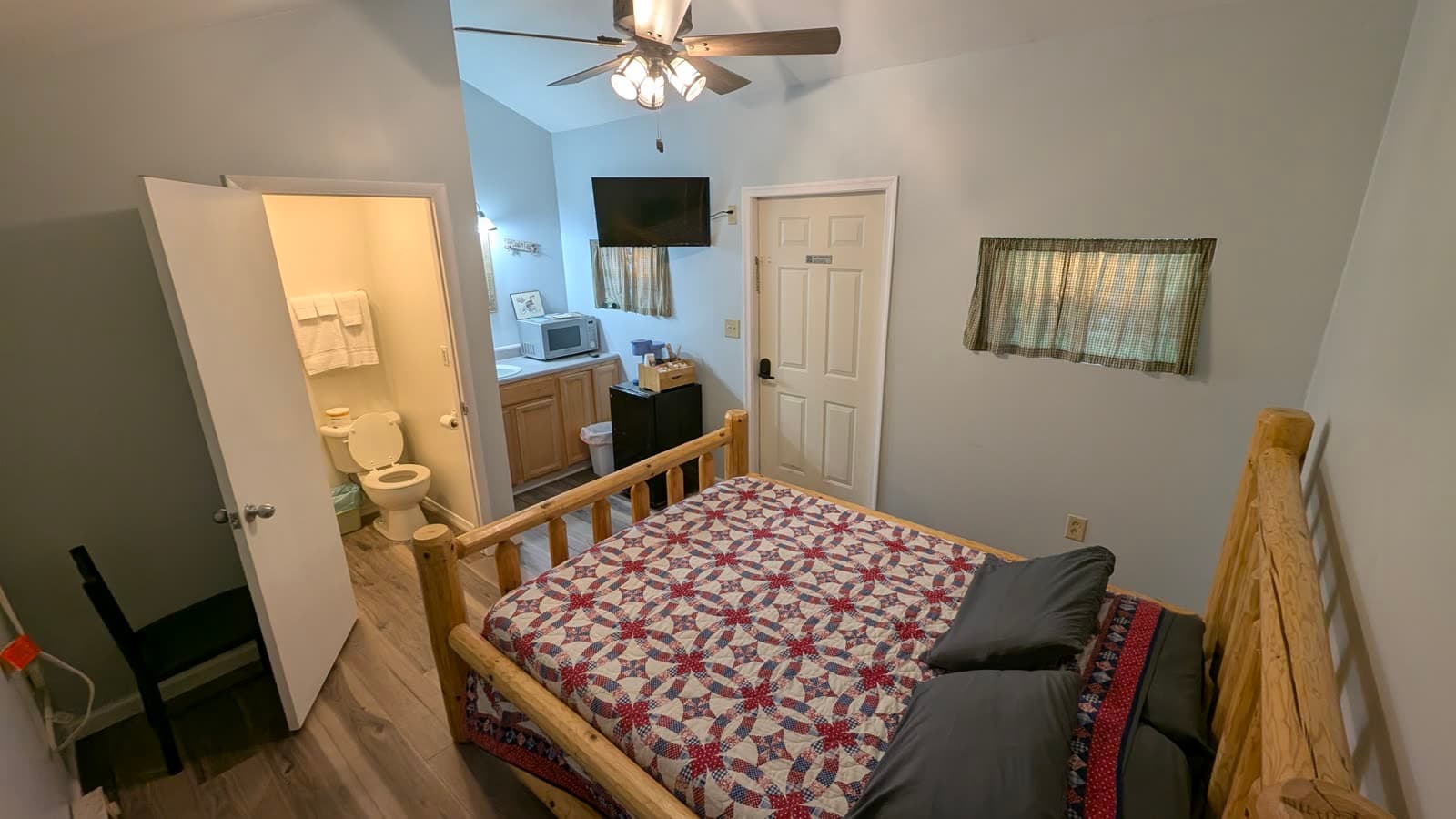
Tracks & Yaks, right next door
All experiences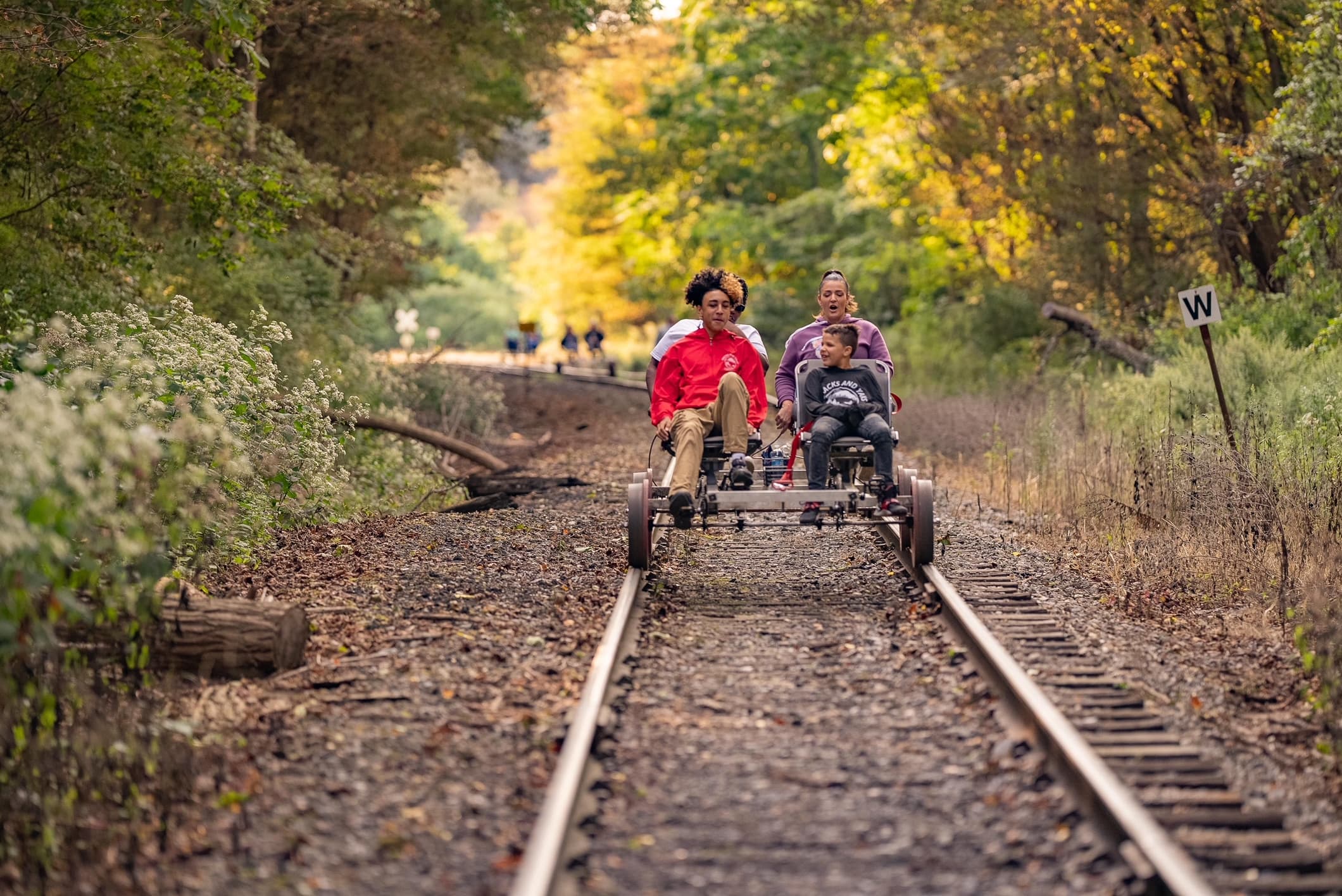
Bike Train (Cumberland → Frostburg)
Load your bike on the train up to Frostburg, then ride the GAP back down. Bring your own bike or add a GAP rental.
from $45
Details →
The Great Deal Passenger Shuttle
A 25-mile point-to-point shuttle so you can ride the GAP one way. Bring your own bike or add a GAP rental.
from $39
Details →Questions, answered straight
Which direction is easier on the GAP trail?
Eastbound, from Pittsburgh toward Cumberland, is generally considered easier. The climb to the Eastern Continental Divide spreads gently across many miles from the west, while the eastern approach packs the elevation into a sustained 16-mile grade from Cumberland up to Frostburg. Eastbound riders finish with that stretch as a long descent instead.
Does wind direction matter when riding the Great Allegheny Passage?
Far less than internet lore suggests. The GAP runs through sheltered river valleys and forest, so prevailing westerlies rarely reach riders in any consistent way. The weather system on your specific dates matters much more than climatological averages. Choose your direction based on the grade and your logistics, not wind theories.
How long is the climb from Cumberland to the GAP summit?
From Canal Place in Cumberland, the trail climbs a continuous railroad grade for about 16 miles to Frostburg, Maryland, then continues to the Eastern Continental Divide, the GAP's high point. It's never steep, but it is unbroken. Riders can skip it by taking the Bike Train from Cumberland to Frostburg, bikes aboard, for $45–49.
Where should I overnight to split the GAP's mountain section?
Frostburg, Maryland sits right where the eastern climb tops out, making it the natural split point in either direction. The Tunnel Hotel, a railroad inn operating since 1888 at 20 Depot St, is a one-minute walk from the trail with queen rooms from $79.79 nightly, tax included, and self check-in at any hour via SMS door code.