The high point
The Eastern Continental Divide on the GAP Trail
Every drop of rain that lands near this spot has a decision to make: Atlantic or Gulf of Mexico. Every cyclist who reaches it has an easier one — because from here, the trail finally goes down.
GAP Trail · 5 min read ·
What the Divide Actually Divides
The Eastern Continental Divide is the ridge line separating two of North America's great watersheds. Water falling on one side works its way toward the Atlantic; water on the other side begins the long journey toward the Gulf of Mexico. The GAP crosses this line near its summit in the high Alleghenies, not far above Frostburg — and the trail marks the spot, so you will know your exact moment of hydrological significance.
For riders, the geography lesson has a practical translation: the Divide is the top. It is the highest point on the entire 150-mile trail, and everything about how your legs experience the GAP comes down to which side of it you are on.
Crossing Eastbound: The Payoff Direction
Riding from Pittsburgh toward Cumberland, the Divide is the destination your whole trip quietly builds toward. The climb from the west is famously stealthy — spread across so many miles of railroad grade that many riders cannot point to where it started — but it is real, and cresting the summit converts all of that stored elevation into your reward. From the marker, the trail descends toward Cumberland, dropping past Big Savage Tunnel, the Mason-Dixon Line, and Frostburg on the way down.
That descent is the finest sustained stretch of freewheeling on the trail. Frostburg, the first town below the summit on the Maryland side, is where smart eastbound riders sleep the night before — so the crossing and the entire drop happen on fresh morning legs. See tunnelhotel.com/gap-trail-lodging for how that stop works.
Crossing Westbound: Pay First, Coast Later
Start in Cumberland and the trail bills you immediately. From milepost 0 the grade turns upward on the first pedal stroke and stays that way to the summit — about 16 trail miles to Frostburg, then more climbing past the state line and the tunnel to the Divide itself. None of it is steep; all of it is relentless. Westbound riders should treat this opening as its own stage: start early, gear low, and consider a Frostburg overnight to break the ascent into two easy pieces.
The consolation is enormous. Once over the top, the remaining days toward Pittsburgh trend gently downhill, and the hardest riding of your entire trip is finished by the end of day one. Some riders skip the grind entirely: Tracks & Yaks runs a Bike Train that lifts riders and bikes from Cumberland up to Frostburg for $45–49, deleting most of the climb from the ledger.
The Divide as a Day Ride
You do not need a thru-ride to earn the summit. From Frostburg the Divide makes a superb out-and-back: a steady climb up the grade, the Mason-Dixon crossing, the roughly 3,300-foot Big Savage Tunnel (closed in winter — confirm it is open first), then the marker itself, followed by a coasting return to town. It is the trail's greatest-hits reel compressed into a morning, and it is why day riders increasingly base here instead of at either endpoint.
No bike with you? Geared rentals sit next door to the hotel — two hours for $25, a full day for $40 — which is all the time the summit run requires.
Sleep at the Top of the Watershed
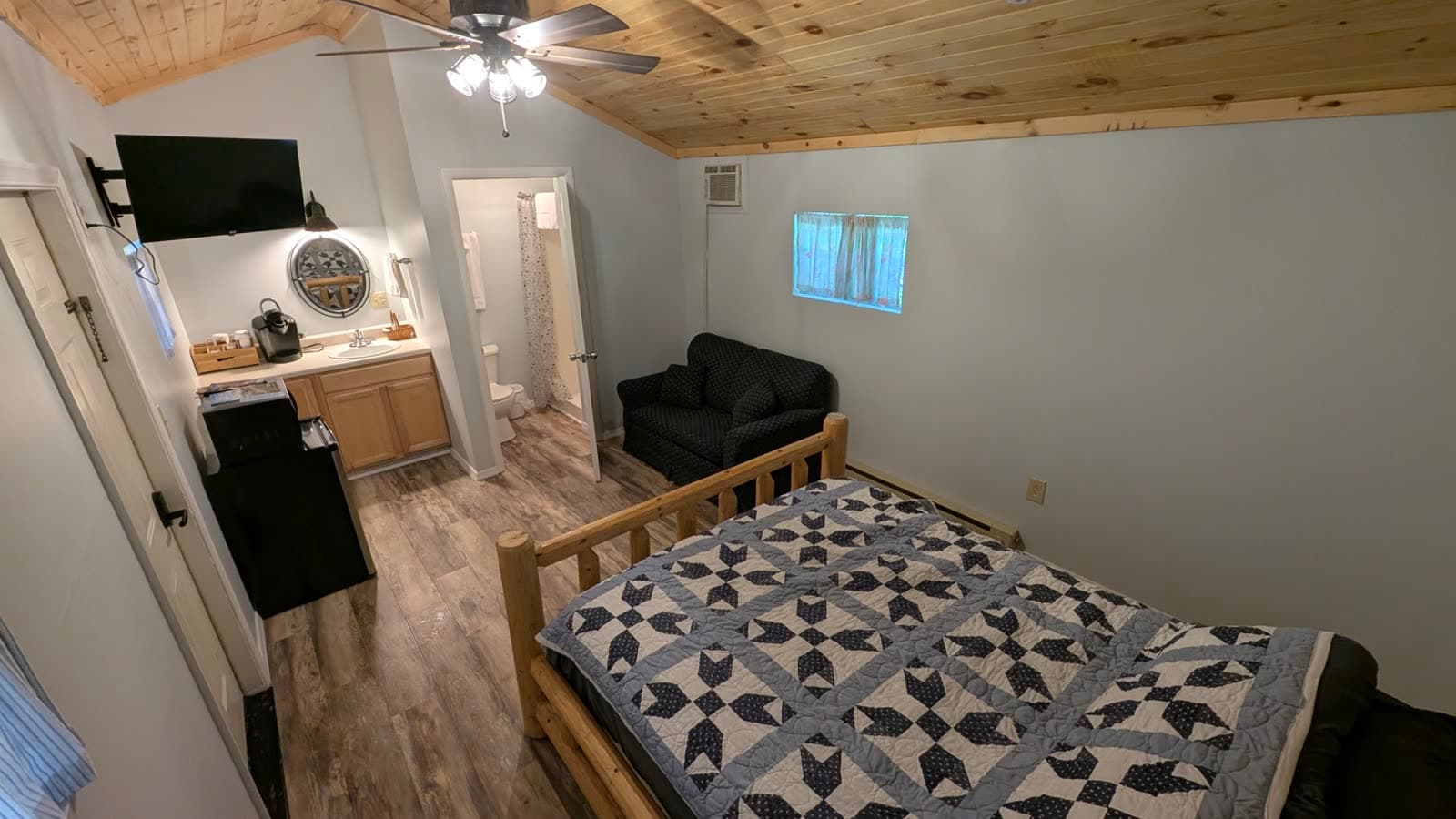
Whichever direction you ride, the Divide's nearest Maryland-side beds are ours. The Tunnel Hotel has been putting travelers to sleep beside these rails since 1888, three hundred yards from the corridor at 20 Depot St in Frostburg — queen rooms from $79.79 with lodging tax already included, bunk rooms sleeping four to six, and a cafe downstairs that will fuel the climb or celebrate the descent. Claim your night at tunnelhotel.com/book and let gravity owe you one.
Beds 300 yards off the trail
All rooms & camping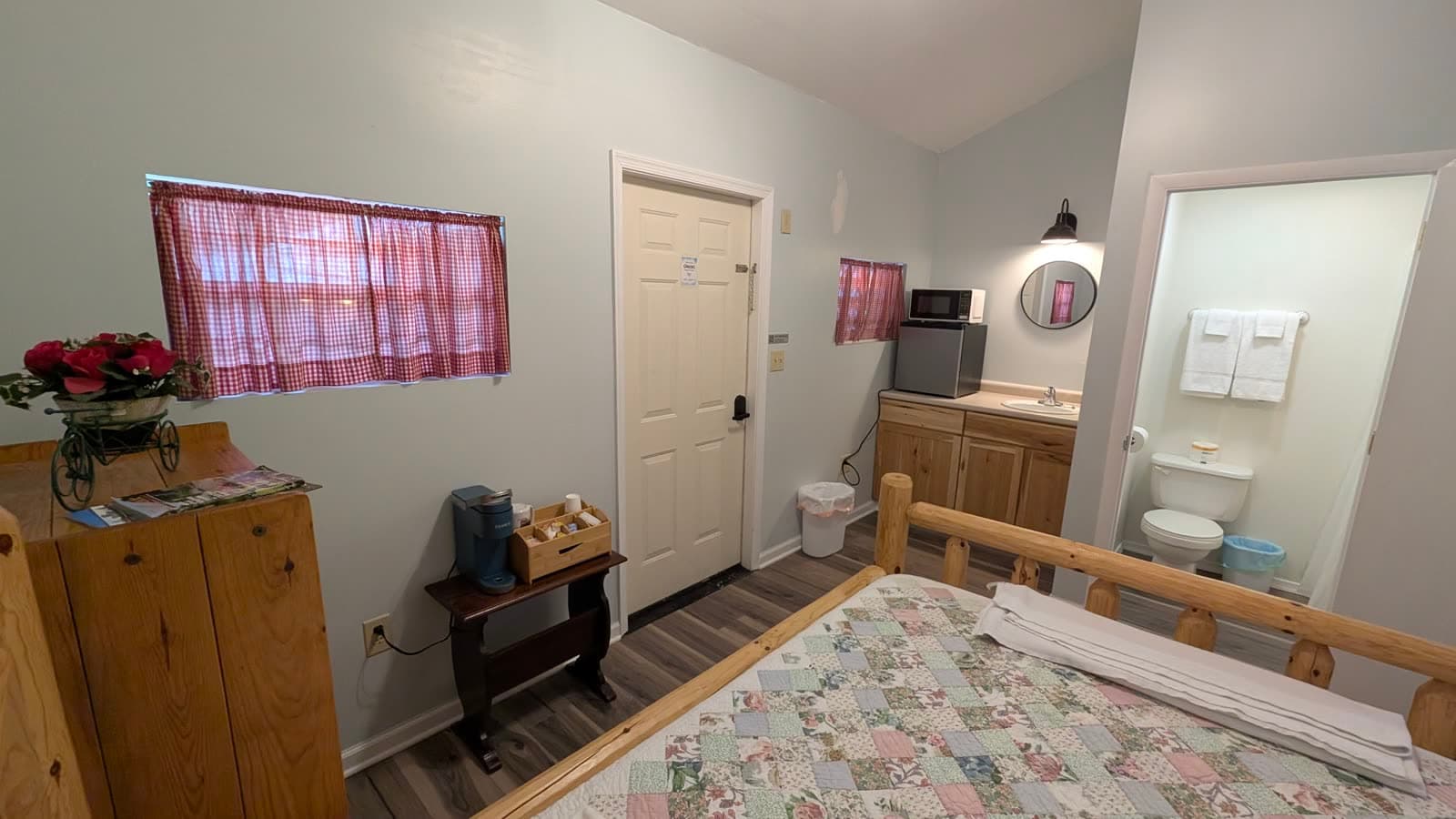
Tracks & Yaks, right next door
All experiences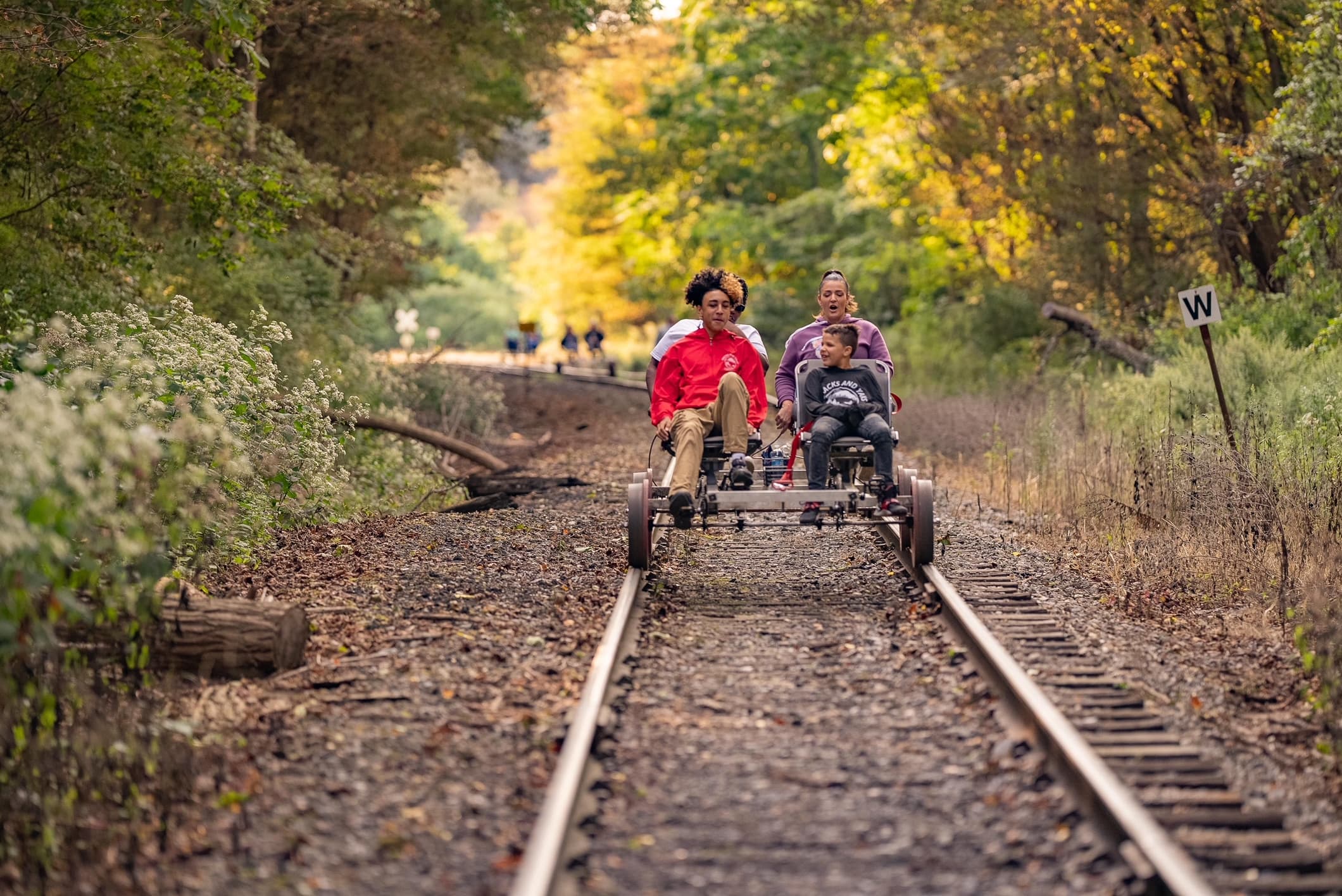
Bike Train (Cumberland → Frostburg)
Load your bike on the train up to Frostburg, then ride the GAP back down. Bring your own bike or add a GAP rental.
from $45
Details →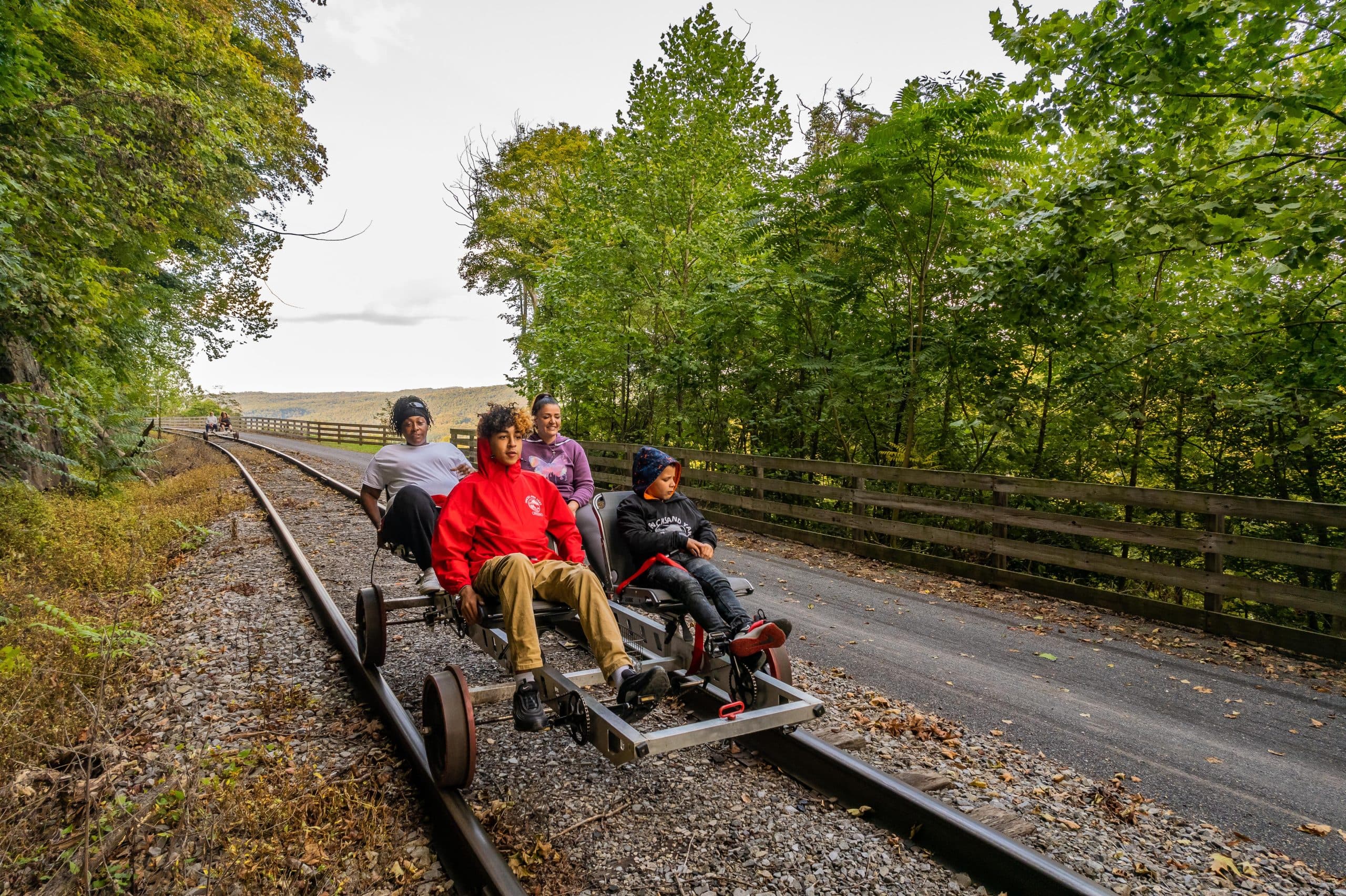
Geared Bicycle Rental — 2 Hour
A geared bicycle for two hours on the Great Allegheny Passage — go at your own pace.
from $25
Details →Queen City Combo — AM (Frostburg)
Railbike down the mountain in the morning, then ride the Western Maryland Scenic Railroad's Frostburg Flyer back up. Rails both ways.
from $169
Details →Questions, answered straight
What is the Eastern Continental Divide on the GAP Trail?
It is the highest point on the 150-mile Great Allegheny Passage, located in the high Alleghenies near Frostburg, Maryland. The Divide separates the Atlantic watershed from the Gulf of Mexico watershed — rain falling on opposite sides drains to different oceans — and the trail marks the crossing for riders.
Is the GAP Trail downhill after the Eastern Continental Divide?
Riding toward Cumberland, yes — from the Divide the trail descends past Big Savage Tunnel, the Mason-Dixon Line, and Frostburg all the way to milepost 0 in Cumberland. Riding toward Pittsburgh, the trail beyond the summit trends gently downhill for days. In both directions, the Divide is where the climbing ends.
How hard is the climb from Cumberland to the Eastern Continental Divide?
Persistent rather than steep. The railroad grade climbs from Cumberland at milepost 0 for about 16 trail miles to Frostburg and continues to the summit beyond. Many riders split it with a Frostburg overnight, and Tracks & Yaks' Bike Train ($45–49) carries riders and bikes from Cumberland up to Frostburg to skip most of it.
Can I ride to the Eastern Continental Divide in one day?
Easily. From Frostburg, Maryland, the Divide is a morning out-and-back on the GAP: climb the gentle grade past the Mason-Dixon Line and through Big Savage Tunnel to the summit marker, then coast home. The Tunnel Hotel at 20 Depot St sits 300 yards off the trail, and geared bike rentals next door run $25 for two hours or $40 all day.