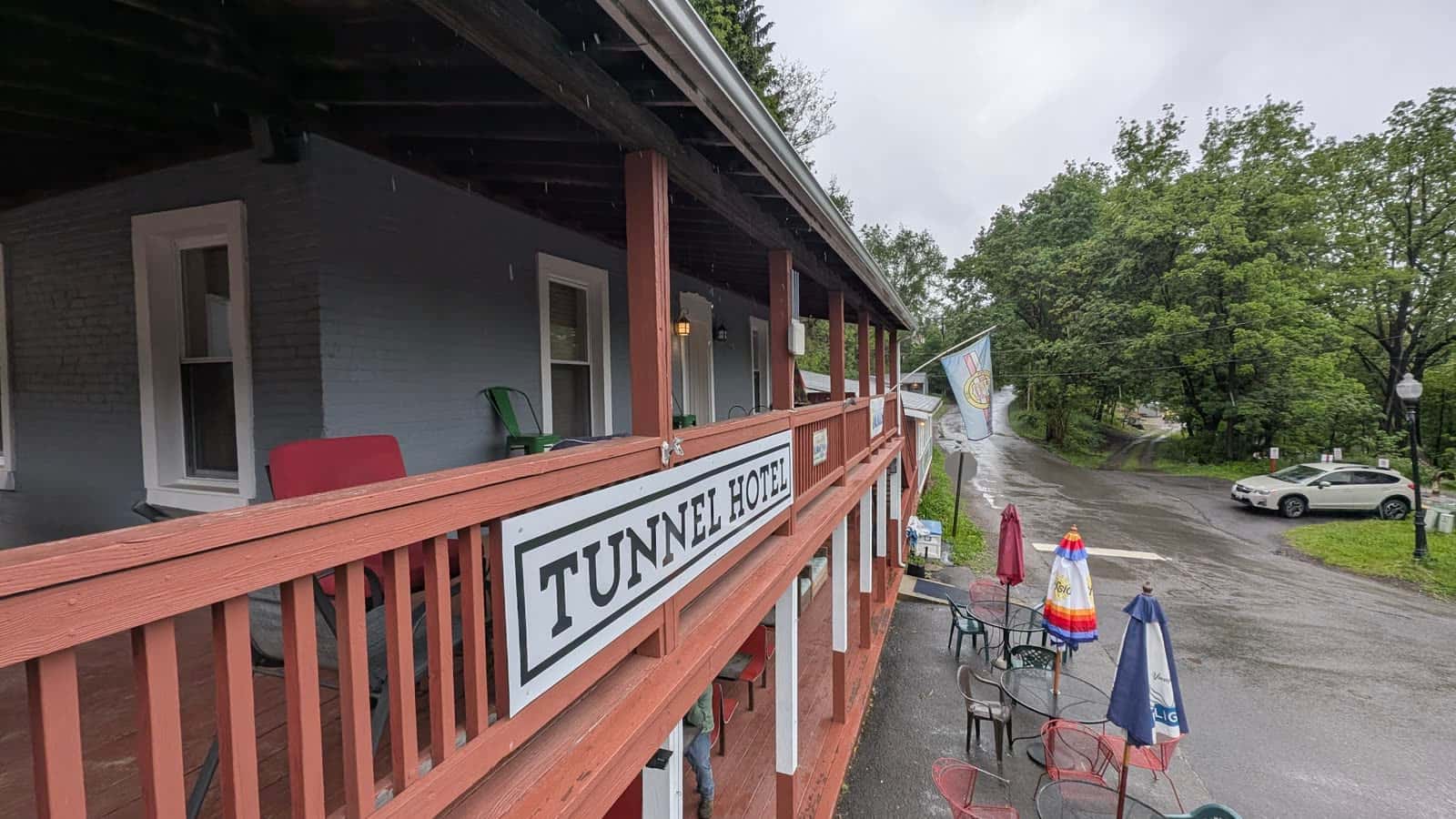
Mountain climate
Frostburg Weather: What to Expect on the Mountain
Pack a layer. That's the short version of this entire post — the long version explains why a town near the top of the GAP has its own climate, season by season.
Frostburg & Cumberland · 5 min read ·
Why Frostburg Runs Cooler Than the Lowlands
The town sits high in the Alleghenies, close to the Eastern Continental Divide — the very summit of the Great Allegheny Passage — and elevation does what elevation always does. Days here typically run noticeably cooler than Washington, Baltimore, or even Cumberland at the bottom of the grade, and evenings drop further still. Locals like to point out that the town's name comes from a founding family rather than the climate, but the coincidence has never hurt the brand.
For visitors, the practical takeaway is simple: whatever the forecast says for the cities you're driving from, subtract some warmth and add some breeze. Summer guests are routinely surprised by how good a light jacket feels on the porch after dark.
The Mountain Year, Season by Season
Every claim below carries an implicit "typically" — mountains improvise. But the broad pattern holds year after year.
- Spring arrives late and fresh. The valley greens up before the ridge does, and early-season riders should expect cool mornings well into May.
- Summer is the mountain's best argument: usually warm, rarely oppressive, with evenings cool enough to make the lowland humidity feel like another state entirely.
- Fall is the marquee season — color typically peaks around mid-October in the high Alleghenies, and crisp riding weather often stretches on either side of it.
- Winter is real winter: snow, wind, and genuine cold. The railbikes and excursion trains run roughly May through October, and the Big Savage Tunnel on the GAP closes for the cold season — typically late November to early April.
What Mountain Weather Means for Riders
Trail and railbike days start cool here even in July, so the classic move is to begin in a layer you'll shed by mid-morning. Afternoon pop-up storms roll through the high country in summer the way they do in most mountains — usually brief, occasionally dramatic — and shoulder-season riders should treat any single-day forecast as a suggestion rather than a contract.
Weather risk on booked rides carries a safety net worth knowing about: if the operator cancels a ride for weather, you receive a full refund or a credit, your choice. That policy exists precisely so you can book a railbike weeks out without gambling on the sky. Cold-season trail riders should also check Big Savage Tunnel status before planning anything over the summit; tunnelhotel.com/blog/big-savage-tunnel-guide has the details.
What to Pack for Frostburg, Any Season
You can skip the expedition gear. What the mountain punishes is packing for the city you left rather than the ridge you're sleeping on.
- A warm layer year-round — fleece or light insulated jacket, even in summer for evenings.
- A rain shell in the riding season; high-country showers arrive fast and leave fast.
- Sun protection — elevation sharpens the sun even on cooler days.
- Real warm gear from late fall through early spring: hat, gloves, and traction-friendly footwear for a snowy Main Street hill.
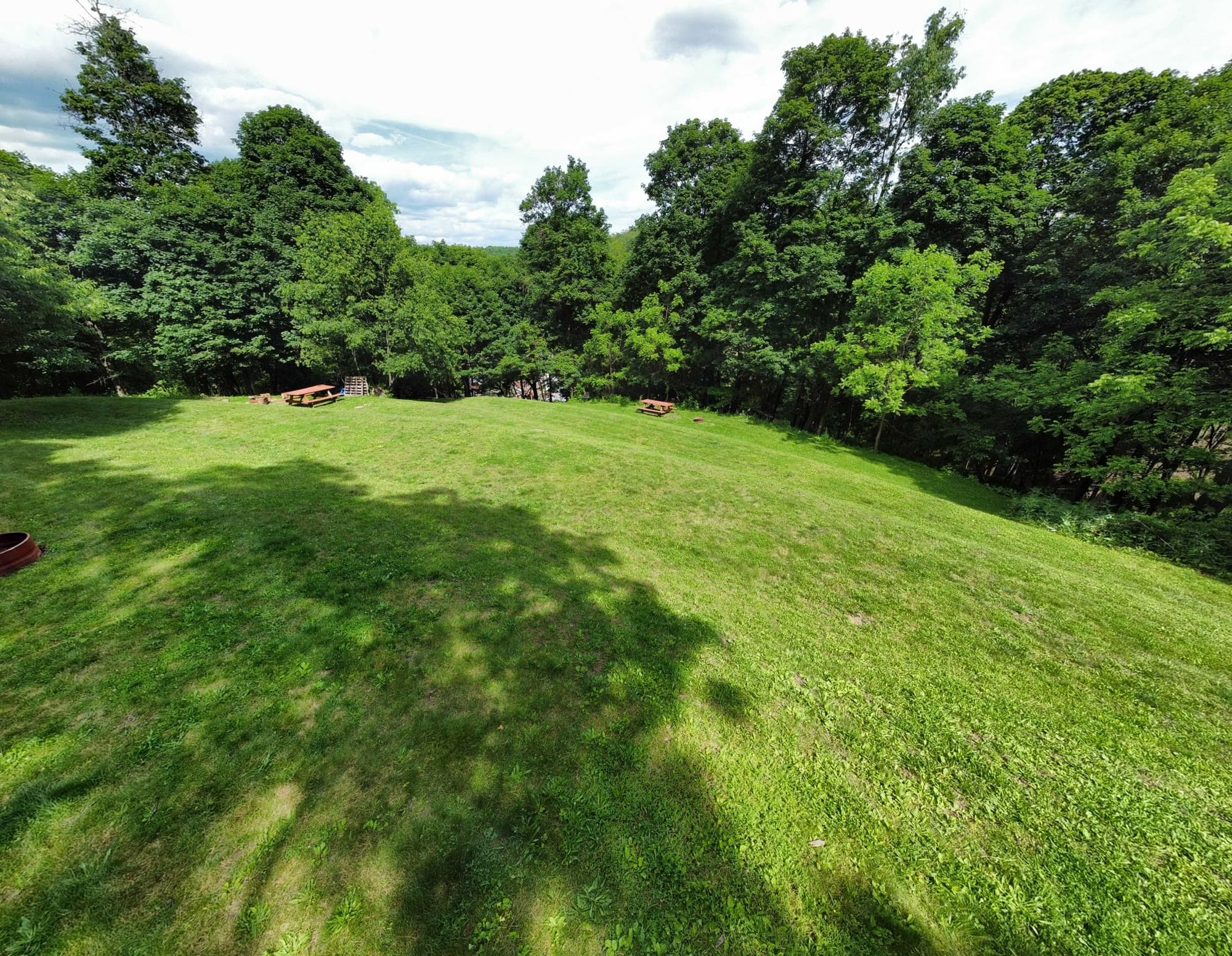
- For campers at our tent sites, a sleeping bag rated warmer than the lowland forecast suggests — mountain nights undercut valley numbers.
The Cool Air Is the Amenity
Here's the reframe worth ending on: the weather people plan around is the same weather people come here for. Cool sleeping air, ridge-top clouds, October color, snow that means it — a town at this elevation offers a different sky than the cities two hours away. Rooms at the 1888 inn start at $79.79 nightly with all tax baked in, and tent sites run $17.10 a person; check the forecast, pack the layer, and book the mountain at tunnelhotel.com/book.
Beds 300 yards off the trail
All rooms & camping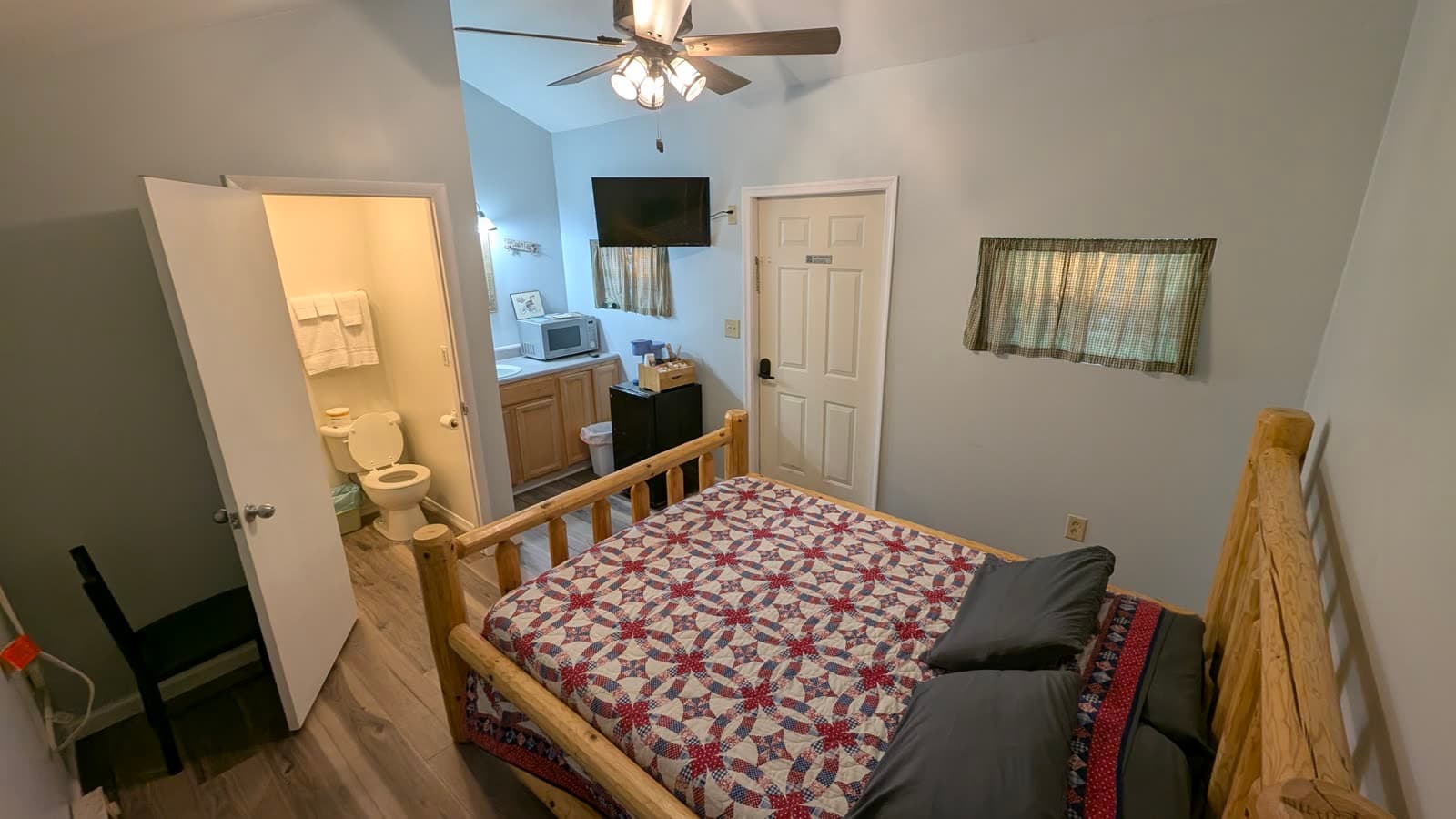
Tracks & Yaks, right next door
All experiences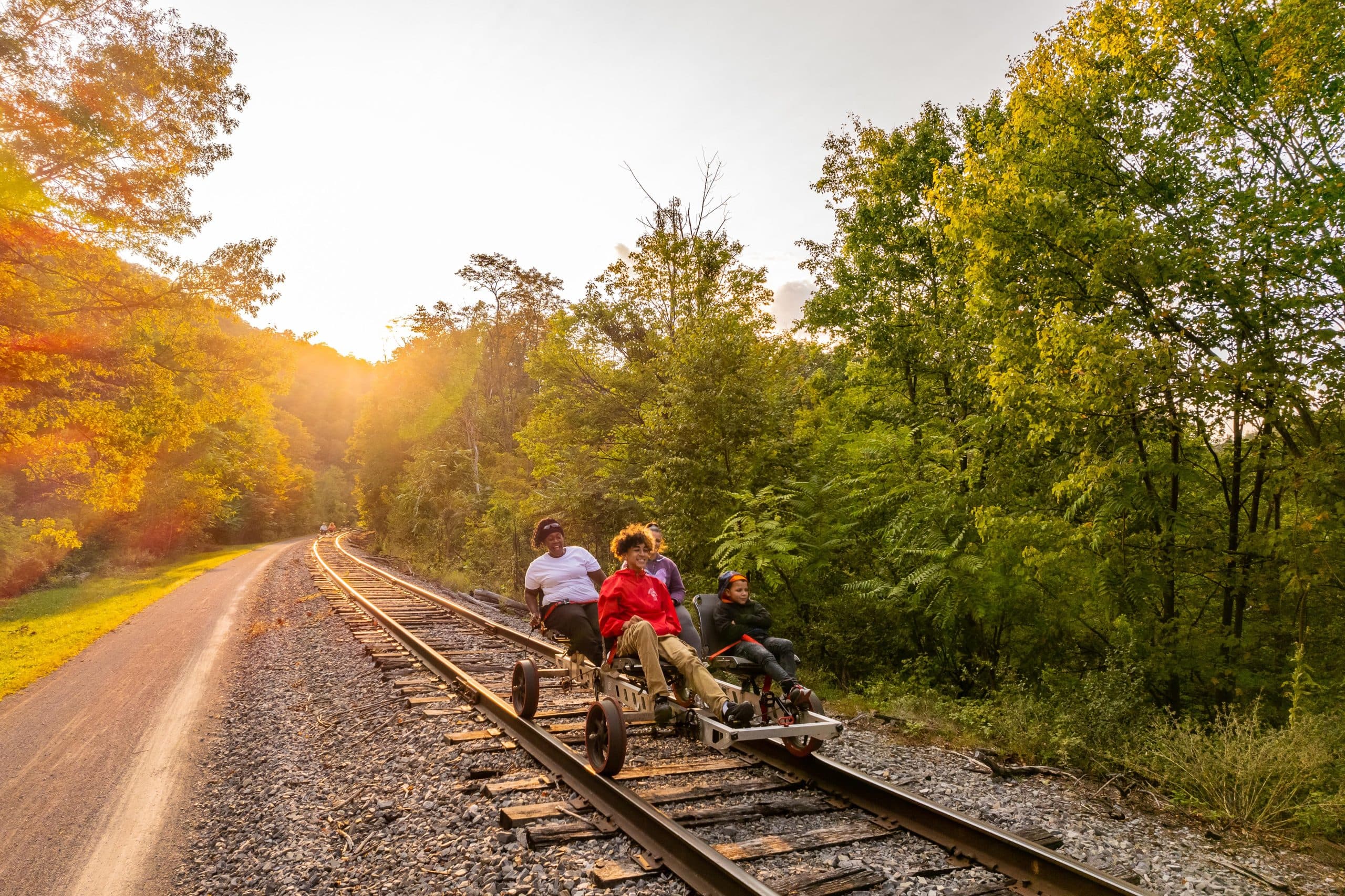
Questions, answered straight
Is Frostburg, Maryland colder than Washington, DC?
Typically yes. Frostburg sits high in the Allegheny Mountains near the Eastern Continental Divide, so temperatures usually run cooler than DC, Baltimore, or the lowlands year-round, with notably crisp evenings even in summer. Visitors should pack at least one warm layer in any season and true winter gear from late fall through early spring.
When do fall leaves peak near Frostburg?
Fall color in the high Alleghenies typically peaks around mid-October, with strong color often extending into the weeks on either side. It's the most popular stretch of the season for both the Great Allegheny Passage and the scenic railroad out of Cumberland, so lodging in Frostburg fills early — booking ahead at tunnelhotel.com/book is wise for October weekends.
What happens to my railbike booking if the weather turns?
If the operator cancels a ride because of weather, you get a full refund or a credit toward another date — your choice. That policy applies to Tracks & Yaks rides booked through The Tunnel Hotel's checkout, which means you can reserve a railbike well in advance without risking your money on a mountain forecast.
Does Frostburg get a lot of snow?
Winters at this elevation are typically genuine — snow, wind, and sustained cold are normal rather than exceptional. The railbikes and excursion trains run roughly May through October, and the GAP's Big Savage Tunnel typically closes from late November to early April, so winter visits center on the town, the inn, and the cafe rather than the rails.
When is the Big Savage Tunnel closed?
The Big Savage Tunnel — a roughly 3,300-foot tunnel on the Great Allegheny Passage near its summit — typically closes for winter from late November to early April to protect it from freeze damage. Anyone planning a cold-season ride over the top of the GAP should verify the tunnel's current status before setting out, since the closure severs the through-route.