Fuel the miles
Eating Along the GAP: Resupply Without the Guesswork
Bonking ends more trail days than any climb does. The good news: the GAP was built through towns, and the towns will feed you — if you understand their rhythm.
Trip Practicalities · 5 min read ·
The Trail Has No Food — the Towns Have Plenty
First principle of GAP eating: the corridor itself sells you nothing. Between towns it is limestone, trees, and river — no vending machines, no snack shacks. Every calorie comes from the communities the old railroad once served, spaced closely enough that a rider passes through several in a normal day. Your food strategy is therefore a town strategy.
Second principle: small-town food businesses keep small-town hours, and those hours shift with seasons, staffing, and luck. The cafe that saved you in May may close early in September. Never build a day where one specific establishment being open is the difference between dinner and despair — check current hours where you can, and always carry a fallback.
A Rhythm That Works: Eat in Towns, Snack Between
Experienced riders converge on the same pattern, because it exploits how the trail is laid out.
- Breakfast big where you slept — a real cooked meal is the cheapest performance upgrade in cycling.
- Lunch in whatever town falls mid-ride; even tiny trail towns usually offer something.
- Carry two to three hours of snacks at all times: bars, nuts, dried fruit, whatever you actually eat under effort.
- Refill water at every opportunity rather than the last one.
- Reach your overnight town with an appetite, not an emergency.
Frostburg's Food Stop: The Trail Inn Cafe
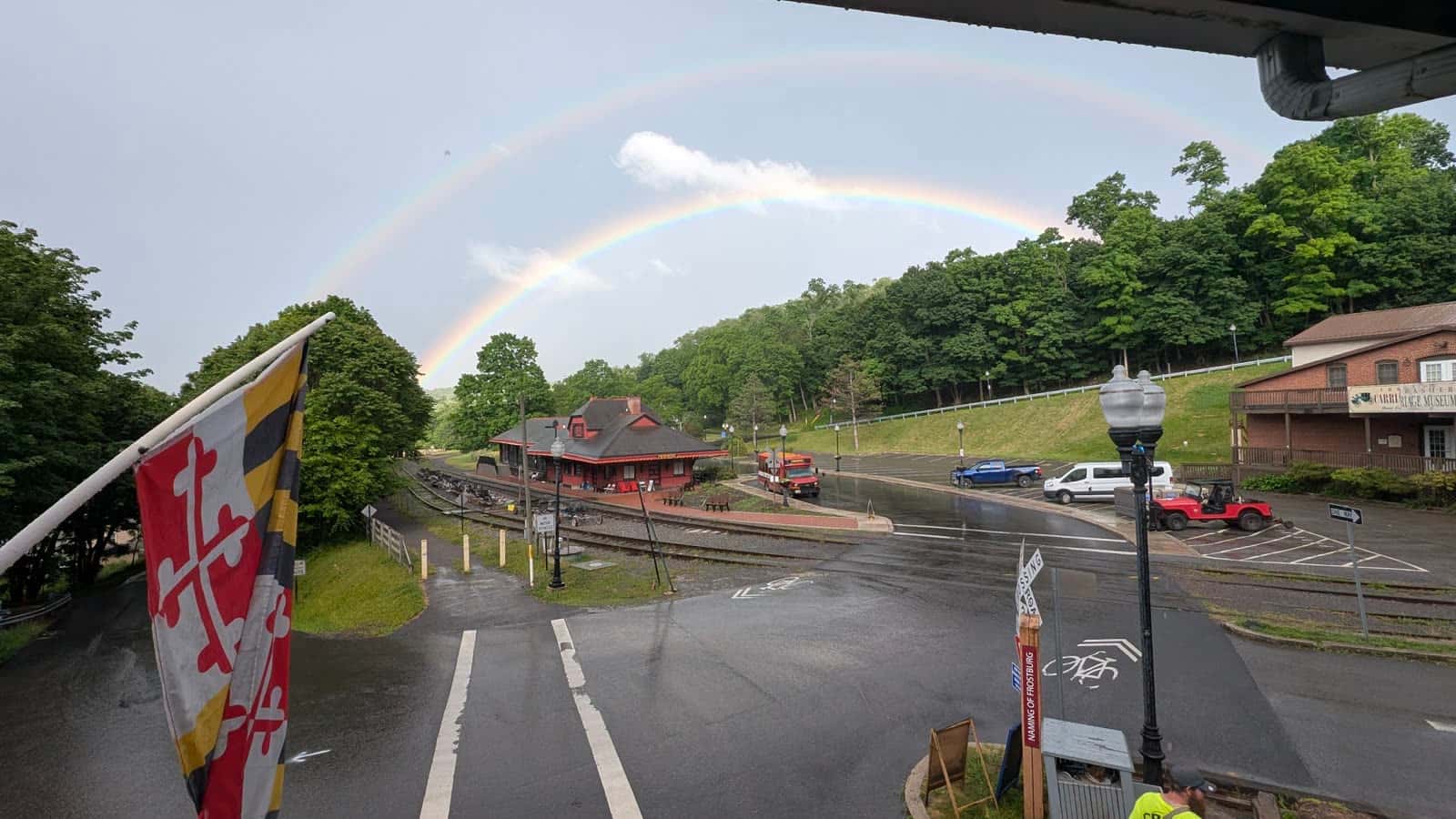
Around 16 trail miles above Cumberland, at the last town before the Eastern Continental Divide, our ground floor holds the Trail Inn Cafe. The lineup was assembled by watching what hungry cyclists ask for: proper coffee, a hot cooked breakfast, sandwiches engineered to travel in a pannier, wood-fired brick-oven pizza for the evening, and local beer to argue over route plans with.
Two mechanics make it unusually trail-friendly. Overnight guests charge everything straight to the room — no digging for a damp wallet at the counter. And anyone can order ahead for pickup at tunnelhotel.com/order, which means the sandwiches for tomorrow's summit push can be waiting when you roll in tonight. A fuller tour of the kitchen lives at tunnelhotel.com/blog/trail-inn-cafe-guide.
Resupplying for the Big Gaps
Two stretches deserve extra planning. The miles around the divide run high and quiet — leaving Frostburg westbound, stock up before you go, because the summit country offers scenery, not services. And riders continuing past Cumberland onto the C&O Canal Towpath enter a different world entirely: the towpath's 184.5 miles to DC are more remote than anything on the GAP, with longer dry spells between reliable food. Load accordingly at the junction.
Cumberland itself, where GAP milepost 0 meets the canal, is the natural provisioning point for the transition — treat it as your last easy everything before the towpath.
What Belongs in Your Feed Bag
Keep the between-town kit boring and proven. Calorie-dense, heat-stable, and familiar beats exotic every time — a century of bonked riders has already run this experiment for you.
- Two bars or equivalent per riding hour beyond your next planned stop
- One salty option — sweat on a long climb wants more than sugar
- Electrolyte tabs or powder for hot days on open stretches
- An emergency ration you never plan to eat (and replace when you do)
Sleep Where the Kitchen Is
The simplest resupply plan on the whole trail is a bed above a cafe. Stay the night, charge dinner and pizza to the room, order tomorrow's lunch for pickup, eat a cooked breakfast, and ride out fully loaded. Rooms start at $79.79 with tax already counted — claim one at tunnelhotel.com/book and let the food problem solve itself for a night.
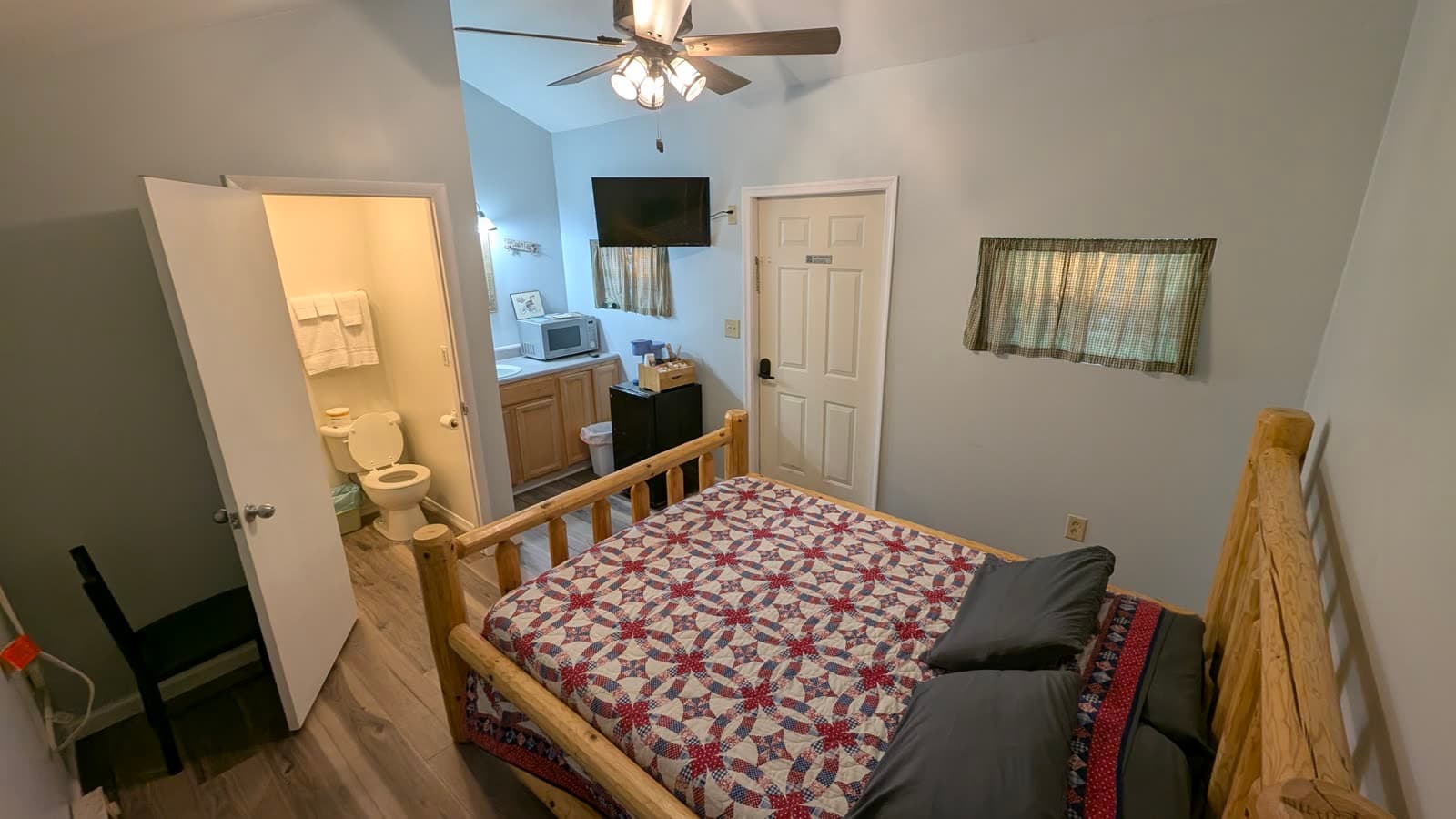
Beds 300 yards off the trail
All rooms & camping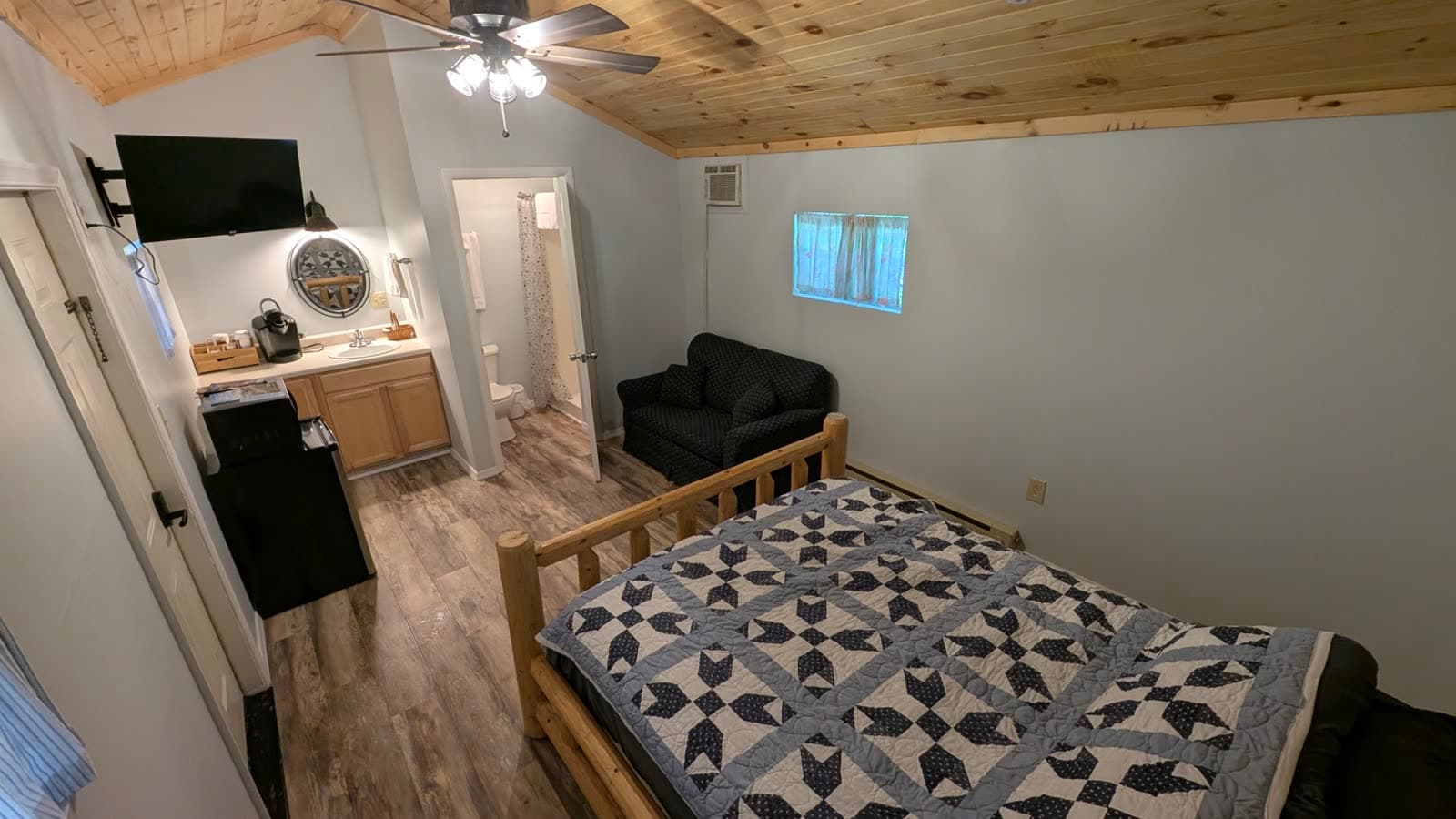
Tracks & Yaks, right next door
All experiences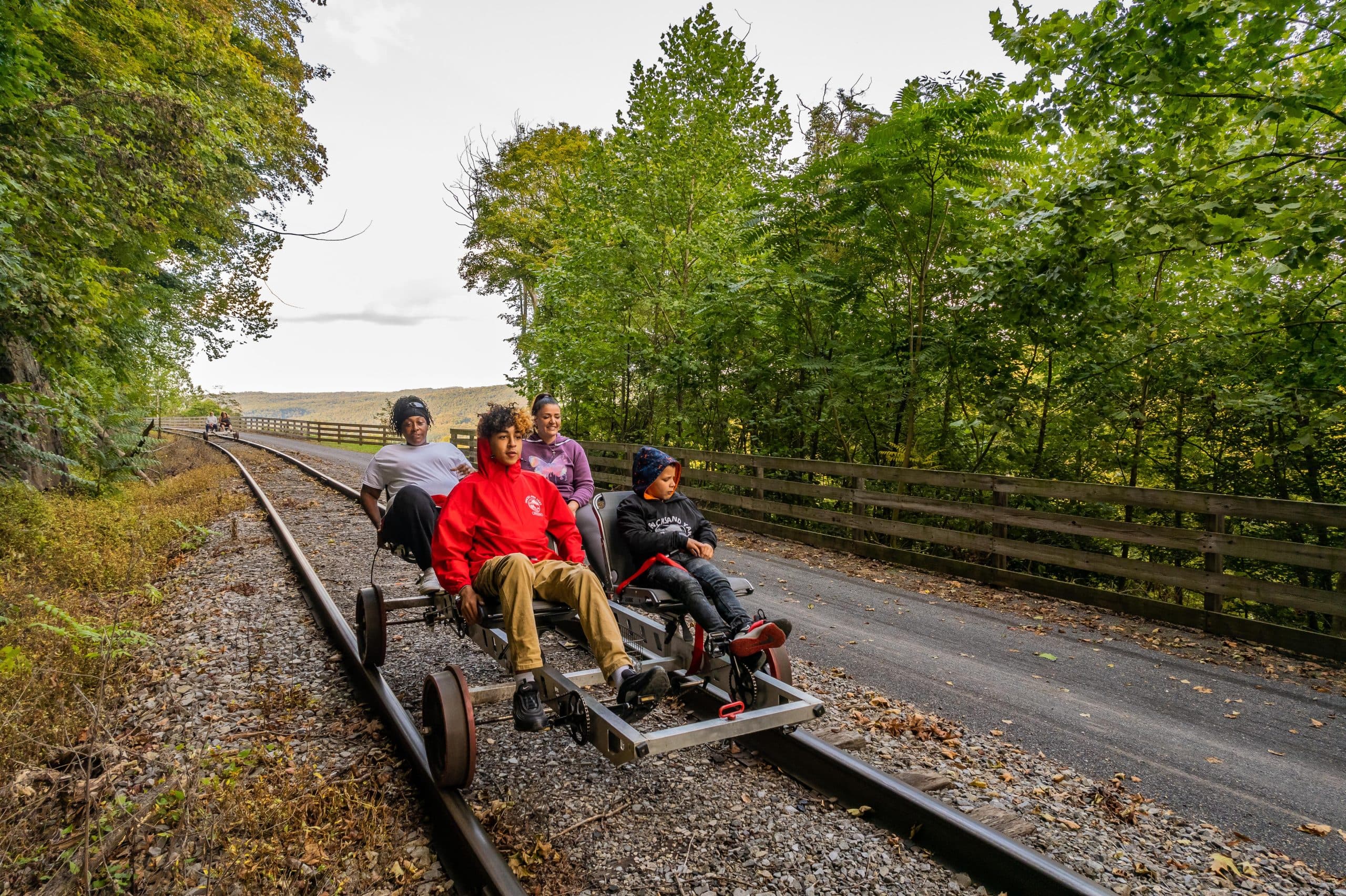
Questions, answered straight
Where do you get food on the GAP trail?
In the trail towns — the Great Allegheny Passage itself has no services between them. Riders eat breakfast where they slept, lunch mid-route, and carry two to three hours of snacks. In Frostburg, MD, the Trail Inn Cafe at The Tunnel Hotel serves coffee, hot breakfast, trail sandwiches, wood-fired pizza, and local beer, about 300 yards off the trail.
Is there a restaurant near the GAP trail in Frostburg?
Yes — the Trail Inn Cafe, on the ground floor of The Tunnel Hotel at 20 Depot St, roughly 300 yards from the trail. It serves hot breakfast, trail-ready sandwiches, wood-fired brick-oven pizza, and local beer. Hotel guests can charge meals to their room, and pickup orders can be placed at tunnelhotel.com/order.
Can I order food ahead for pickup on the GAP?
In Frostburg you can: the Trail Inn Cafe takes pickup orders at tunnelhotel.com/order. Riders commonly order sandwiches the night before a long day so their resupply is boxed and ready at departure — especially useful before the quiet stretch over the Eastern Continental Divide.
How much food should I carry between GAP trail towns?
Plan on two to three hours of snacks — roughly two bars per riding hour past your next stop, plus one salty item and an emergency ration you replace whenever it gets eaten. Towns appear regularly on the GAP, but hours at small establishments vary, so carry enough to shrug off a closed door.
Where should I resupply before the C&O Canal Towpath?
Cumberland, MD — the junction where the GAP ends at milepost 0 and the 184.5-mile C&O Canal Towpath to Washington, DC begins. The towpath is notably more remote than the GAP, with longer gaps between reliable food, so stock fully in Cumberland before continuing east.