Two trails, one line
C&O Canal vs GAP Trail: What Actually Changes at Cumberland
On the map they read as one continuous route to DC. Under your tires, the towpath and the Passage are two different animals — and knowing how they differ is most of the planning.
C&O Canal & Thru-Rides · 6 min read ·
Two Trails, One Junction: The Numbers
The Great Allegheny Passage covers 150 miles from Pittsburgh to Cumberland, Maryland. The C&O Canal Towpath picks up exactly where it stops and carries on 184.5 miles from Cumberland to Georgetown in Washington, DC. Stitched together they form the 334.5-mile route that fills panniers every summer, and the seam between them — Canal Place in Cumberland — is where nearly everything about the ride changes.
The GAP is a rail-trail: graded for locomotives, later resurfaced for bicycles. The towpath is older infrastructure entirely, a mule path built so animals could drag canal boats along the Potomac. That one difference in ancestry explains almost every contrast below.
Surface: Crushed Limestone vs Canal-Era Dirt
The Passage rolls on crushed limestone that packs firm, drains quickly, and behaves predictably in most weather — not pavement, but close enough on tires 32mm and up. The towpath is rougher business. Long stretches are packed dirt and gravel that hold puddles after rain, with roots and ruts wherever the canal era left them. Resurfacing projects have smoothed sections of the C&O in recent years, but conditions swing year to year, so check National Park Service updates before committing to big-mileage days east of Cumberland.
A useful planning rule: whatever daily distance feels sustainable on the GAP, assume the same effort buys you noticeably fewer miles on the towpath — and fewer still after wet weather.
Remoteness: Where the Services Are
The GAP threads through living trail towns, because the railroad needed towns and the towns stayed. Beds, cafes, and bike shops appear at rideable intervals the entire way. The C&O runs through far emptier country as a national historical park: settlements sit off the path across the river or up an access road, water comes from seasonal pumps, and overnights lean heavily on primitive hiker-biker campsites. Neither half is wilderness, but the towpath asks for more food, more water planning, and more self-reliance.
- GAP: commercial lodging, restaurants, and shops close to the trail at regular intervals.
- C&O: primitive campsites, seasonal water pumps, and resupply that usually means leaving the towpath.
- Both: no lighting, unreliable cell coverage in the middle stretches, and long gaps between bailout points.
Grade: One Mountain vs a Flat River Path
The Passage has a summit — the Eastern Continental Divide, up near Frostburg — with gentle railroad grades approaching it from both sides. You climb for hours but never steeply. The towpath follows the Potomac and is functionally flat the whole way to DC. Flat sounds easier, and on paper it is. In practice plenty of riders find the C&O the more tiring half: rougher surface, zero coasting descents, and the identical pedaling cadence for days on end. The GAP at least gives your legs variety, plus a long earned downhill if you ride toward Cumberland.
The Case for Each Half
Honest verdict: the GAP is the more comfortable ride, and the C&O is the more atmospheric one. The towpath delivers lockhouses, aqueducts, the Paw Paw Tunnel, and a green corridor of Potomac forest that feels genuinely removed from the modern world. The Passage answers with viaducts, mountain overlooks, tunnels of its own, and a hot meal whenever you want one. Thru-riders who love one half often merely endure the other — and which is which says more about the rider than about the trails.
If you can only ride one: pick the GAP for a first tour or a comfort-first trip, the C&O for solitude and canal history. Our tunnelhotel.com/co-canal-towpath-lodging page covers basing yourself near the towpath's western terminus.
Plan the Seam: Cumberland and the Mountain Above It
Whichever direction you travel, everything resets at Cumberland — surface, services, grade, even the mood of the towns. That makes the junction the smartest place to rest and regroup. The Tunnel Hotel sits 16 trail miles up the grade from Canal Place, an 1888 railroad inn 300 yards off the Passage in Frostburg; a queen runs from $79.79 a night with Maryland's lodging tax already folded into the number, and tent sites go for $17.10 a person. Roll down to the junction fresh, or climb up to us for a real bed before the towpath's camp-heavy miles. Either way, reserve at tunnelhotel.com/book — direct, fee-free, and secure.
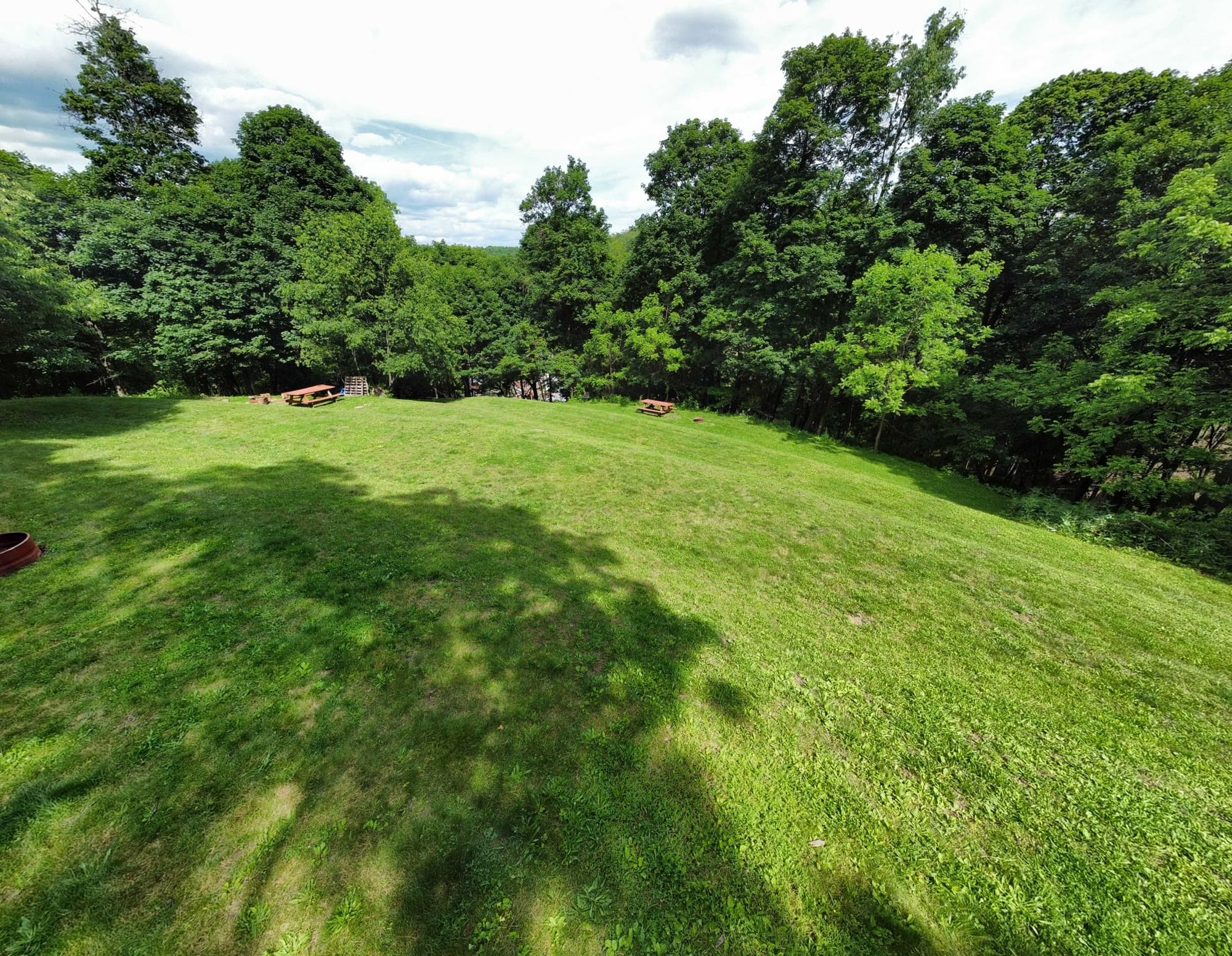
Beds 300 yards off the trail
All rooms & camping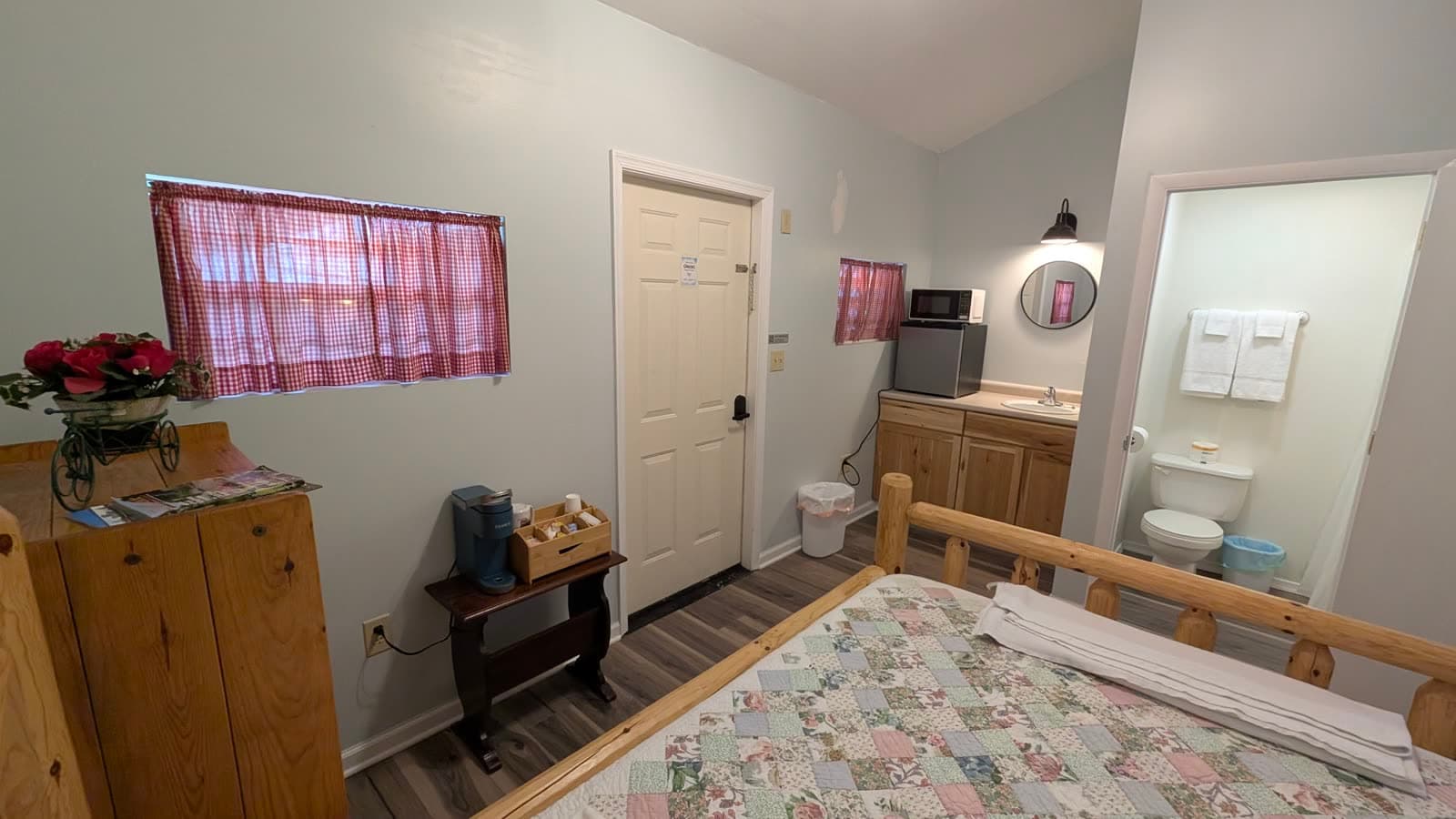
Tracks & Yaks, right next door
All experiences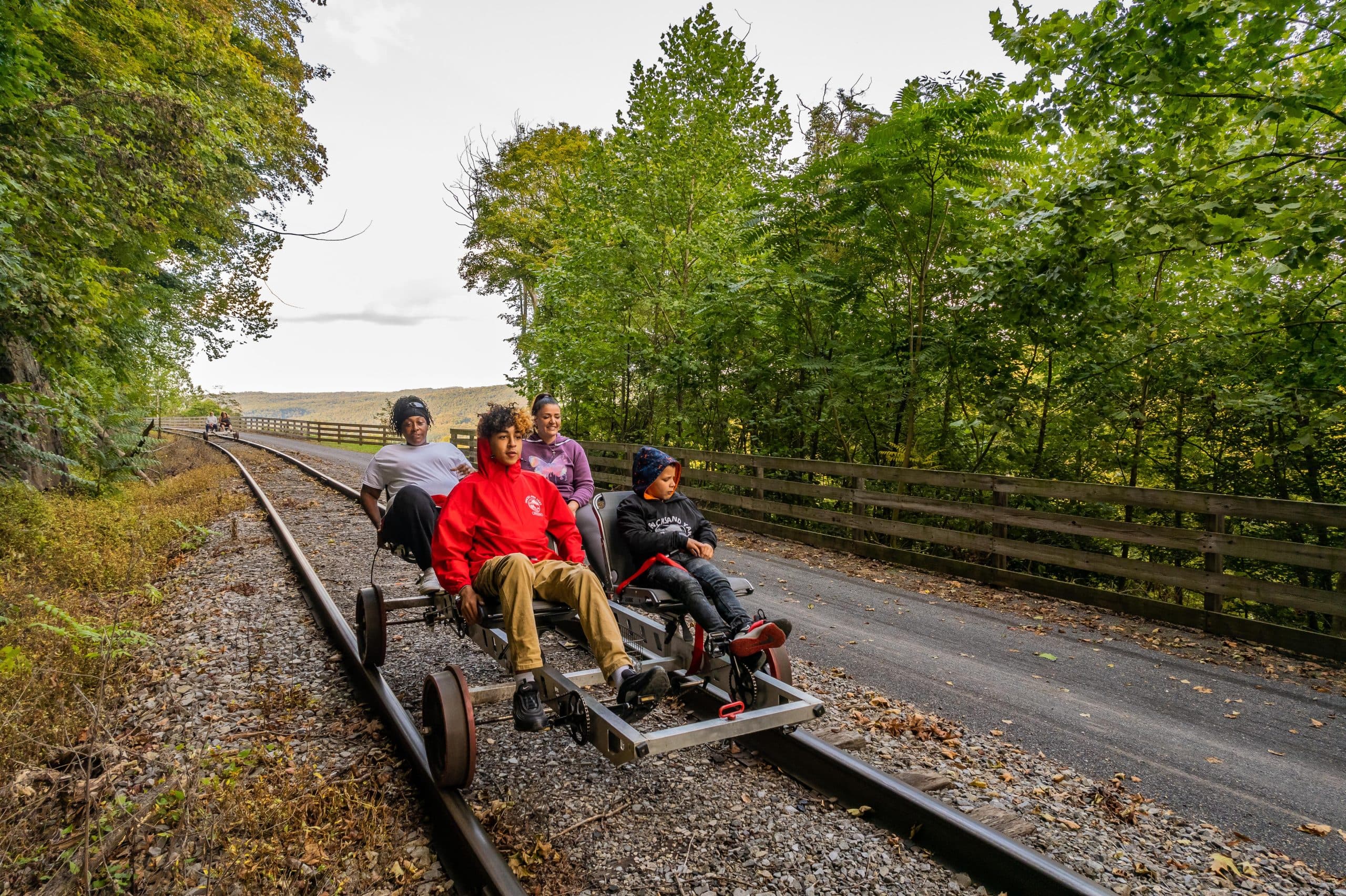
Geared Bicycle Rental — Full Day
A geared bicycle for the full day — explore the GAP from Frostburg in either direction.
from $40
Details →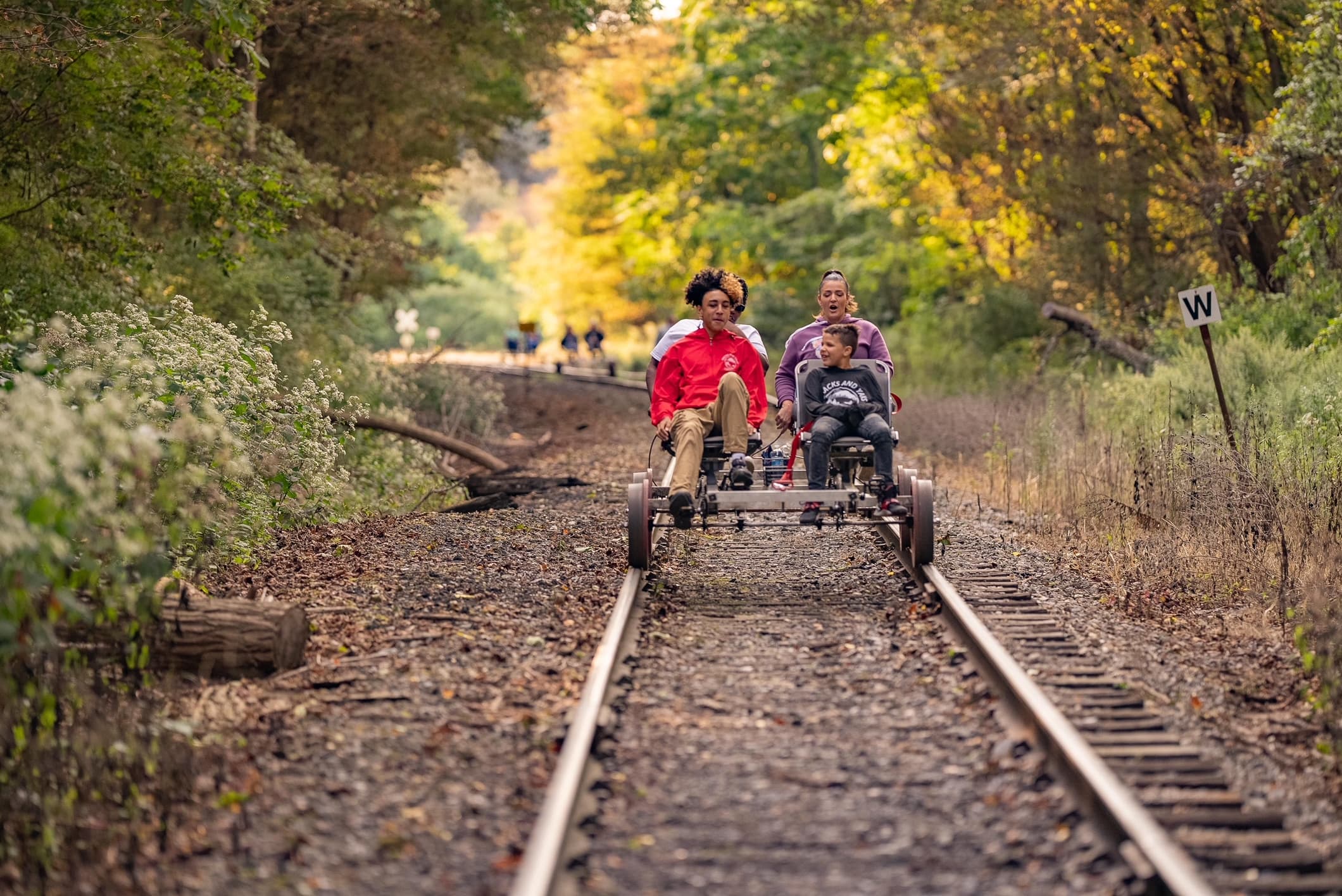
Bike Train (Cumberland → Frostburg)
Load your bike on the train up to Frostburg, then ride the GAP back down. Bring your own bike or add a GAP rental.
from $45
Details →Questions, answered straight
Are the GAP Trail and the C&O Canal Towpath the same trail?
No — they connect end to end. The Great Allegheny Passage is a 150-mile crushed-limestone rail-trail from Pittsburgh to Cumberland, Maryland. The C&O Canal Towpath is a separate 184.5-mile National Park Service path from Cumberland to Washington, DC. They meet at Canal Place in Cumberland, forming a combined 334.5-mile route.
Which is harder to ride, the GAP or the C&O Canal?
The GAP has real climbing — a long gentle grade to the Eastern Continental Divide near Frostburg — but its crushed-limestone surface is smooth and fast. The C&O is flat yet rougher, with dirt, ruts, and puddles after rain. Many thru-riders report the towpath feels harder per mile despite the lack of hills.
How long is the full ride from Pittsburgh to Washington, DC?
334.5 miles total: 150 miles on the Great Allegheny Passage from Pittsburgh to Cumberland, then 184.5 miles on the C&O Canal Towpath from Cumberland to Georgetown. Most riders take somewhere around a week, though pace varies widely with surface conditions and daily mileage goals.
Where should I stay between the GAP and the C&O Canal?
Frostburg, Maryland works well — it sits 16 trail miles above Cumberland, where the two trails join. The Tunnel Hotel, an 1888 railroad inn at 20 Depot St, offers queen rooms from $79.79 a night (the advertised price includes Maryland's 14% lodging tax) plus camping at $17.10 per person, with 24-hour contactless check-in for late arrivals.