Why Riders Look at Amtrak First
One-way trail trips live or die on the return leg, and a scheduled passenger railroad beats improvised van logistics on paper every time: fixed departures, no driving, and the pleasant symmetry of arriving at a rail-trail by rail. For the GAP and C&O corridor specifically, the appeal is obvious — the historic passenger route between Washington and Pittsburgh has traditionally stopped at Cumberland, which is milepost 0 of the GAP and the western end of the C&O Towpath. In principle, the train touches all three key points of the 334.5-mile route.
What the Route Has Been — and Why We Hedge
For decades the Capitol Limited was the train in question, linking DC, Cumberland, and Pittsburgh overnight. But Amtrak has reshuffled its long-distance network in recent years, and names, schedules, frequencies, and station stops along this corridor have all changed at various points. We deliberately publish none of those details here, because any specifics we printed would eventually rot into misinformation.
Treat this article as a framework, not a timetable. The only current source that counts is amtrak.com or Amtrak's phone agents, checked close to your travel dates — and checked again before you buy nonrefundable anything.
The Bike Question: Verify Every Piece
Getting yourself aboard is the easy half; getting your bicycle aboard is where plans collapse. Amtrak's bike handling has taken different forms over the years — walk-on racks on some trains, boxed bikes checked as baggage on others, and rules that differ by train and even by station. Before you build a trip around it, get explicit answers to each of these:
- Does the current DC–Cumberland–Pittsburgh service carry bikes at all, and in what form — roll-on rack or boxed?
- Is a bike reservation required, and how many bike spaces does each departure sell?
- Do your specific boarding and detraining stations support bike loading, or is it restricted to staffed stops?
- What are the actual arrival and departure times — overnight trains can put you at a trailhead at unhelpful hours?
- What happens to your reservation if the train or the bike car is cancelled that day?
Sketching a One-Way Plan Around the Train
If the answers come back favorable, the classic structures work beautifully. Drive to one terminus, ride the trail, train back to the car. Or train to your starting city with the bike, then ride home to where you parked. Cumberland's station position makes half-route trips possible too: a GAP-only ride from Pittsburgh can end at the junction and catch the train east or west, and towpath riders can do the mirror image. Build slack into the schedule on both ends — a missed train on a once-daily route costs a full day.
Whichever shape you choose, the route-planning side of a one-way trip is mapped out at tunnelhotel.com/pittsburgh-to-dc-bike-trip and tunnelhotel.com/gap-trail-from-pittsburgh.
If the Train Doesn't Cooperate
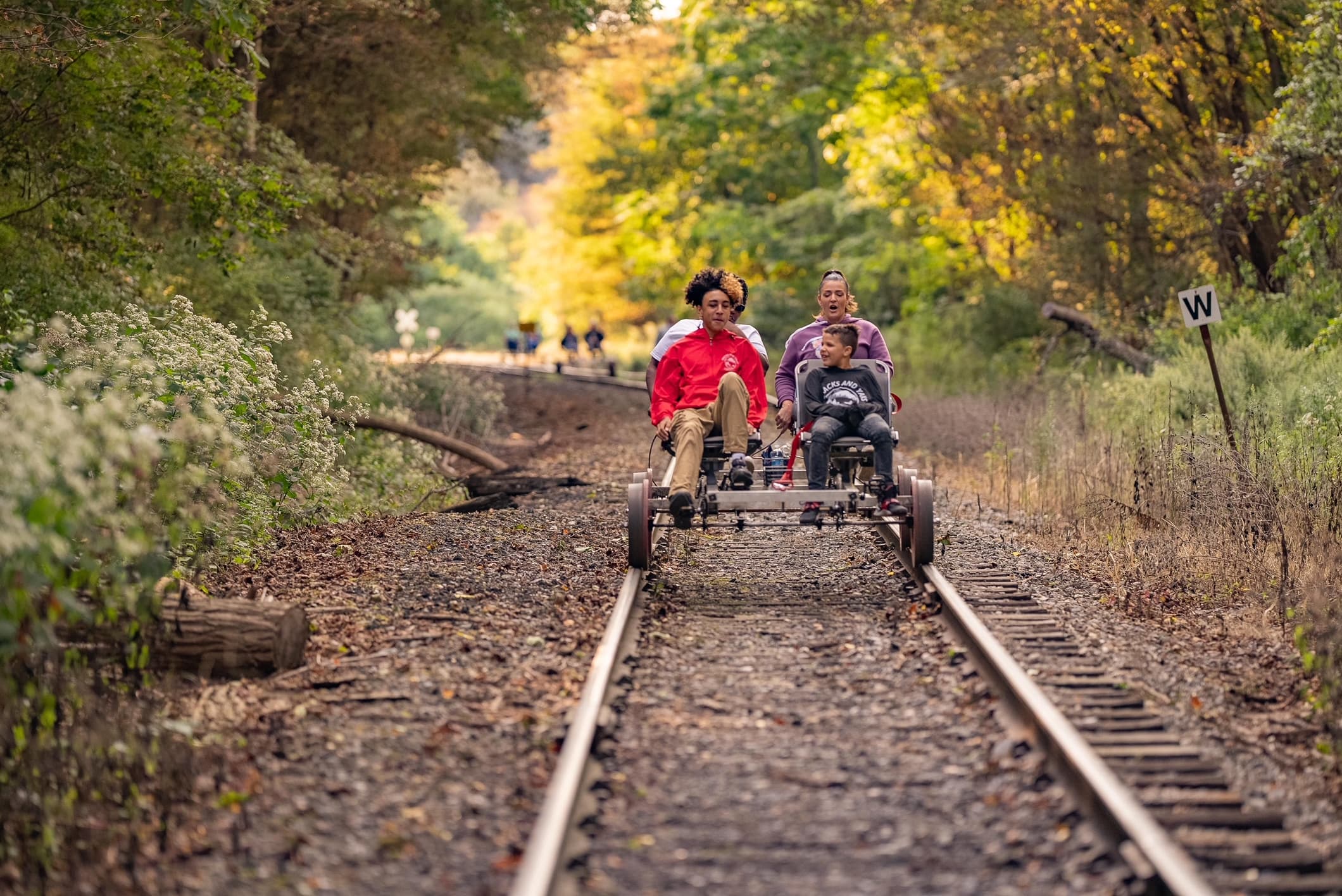
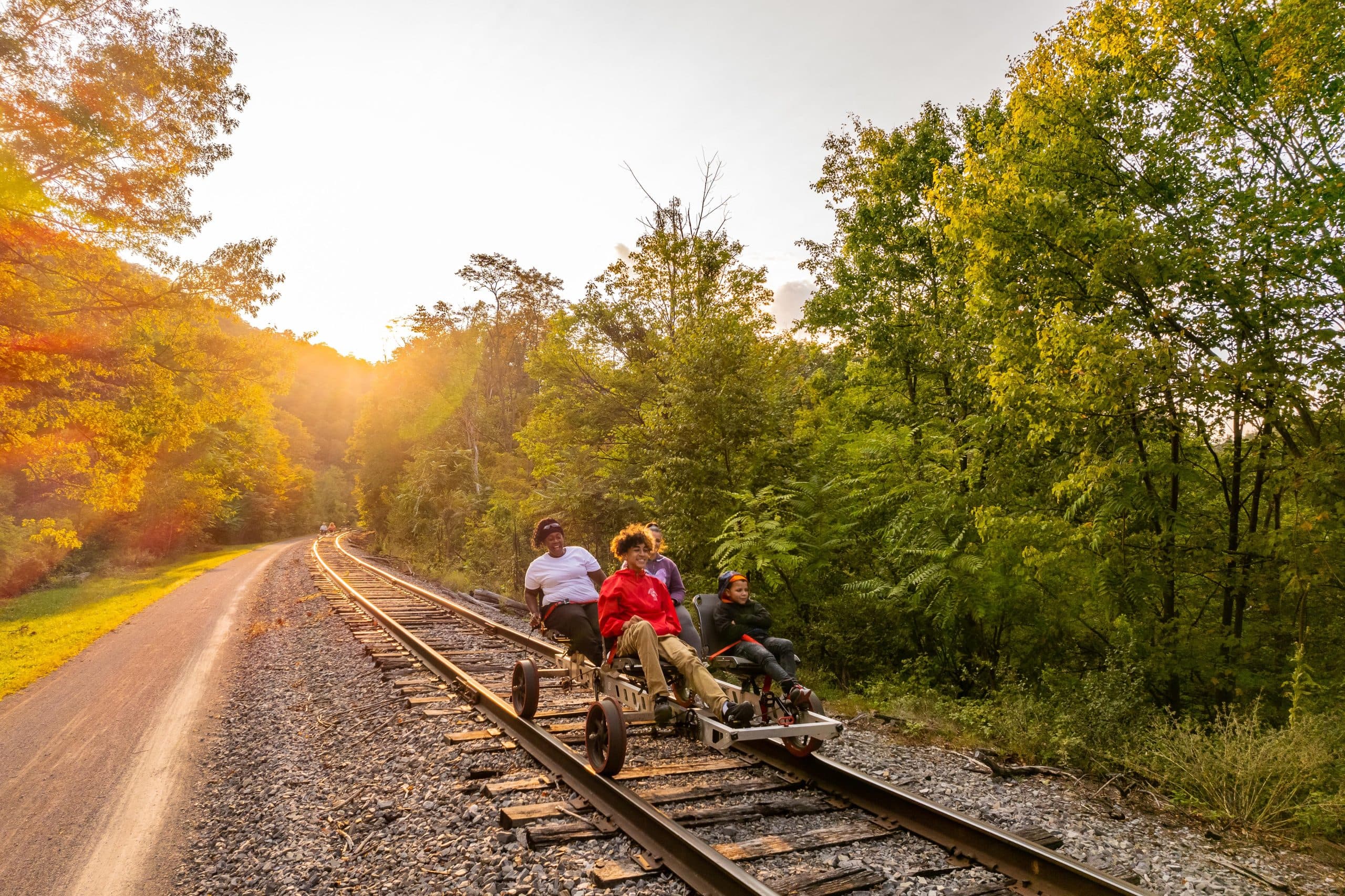
No bike space, wrong day, cancelled run — it happens, and the trip survives it. On the mountain end of the GAP the local machinery fills the gap: Tracks & Yaks moves bikes uphill from Cumberland aboard the Bike Train and moves people on the Great Deal Passenger Shuttle, both covered in detail at tunnelhotel.com/blog/gap-trail-shuttle-guide. And an out-and-back itinerary based in one town needs no transport at all beyond your own legs.
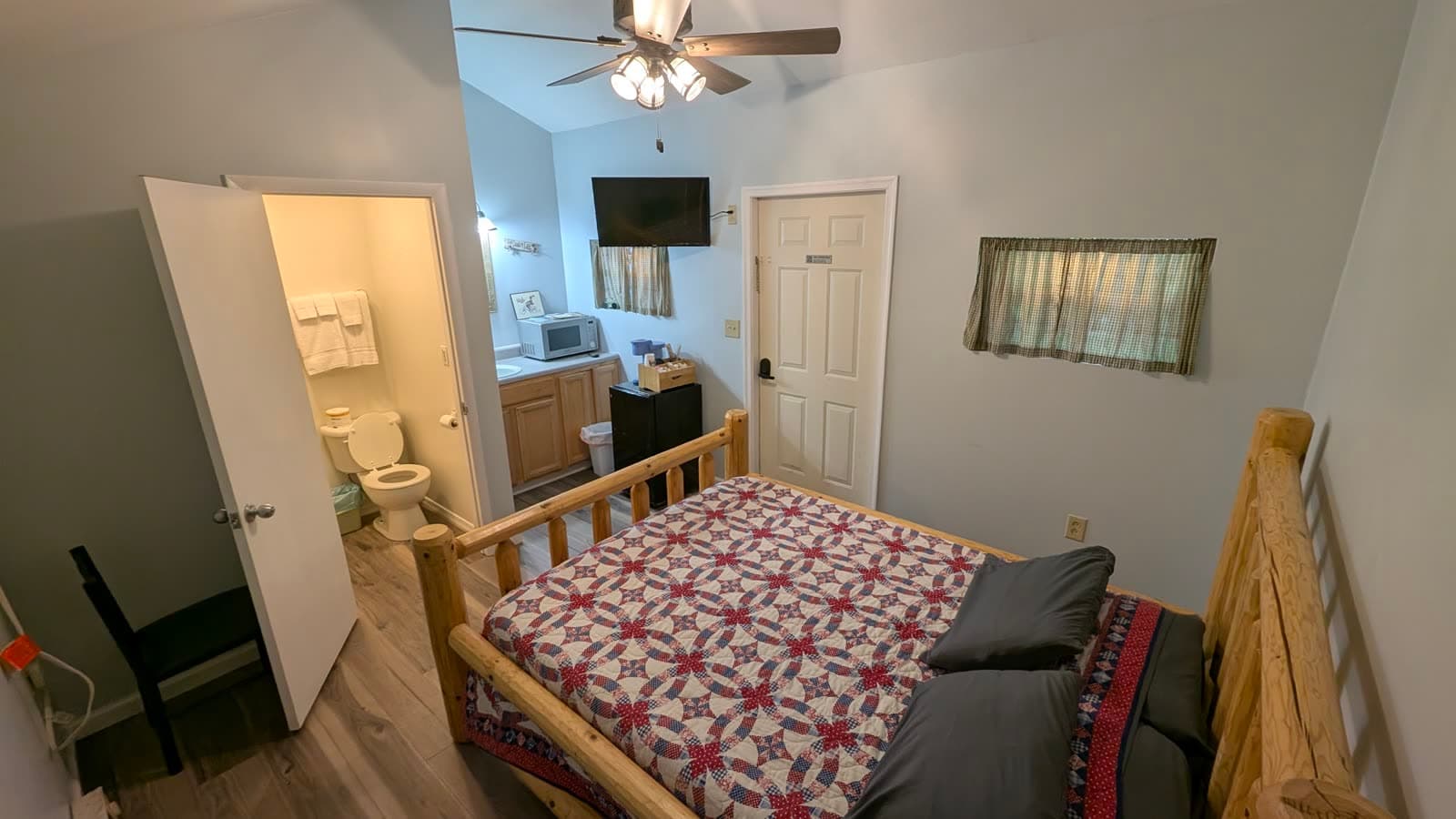
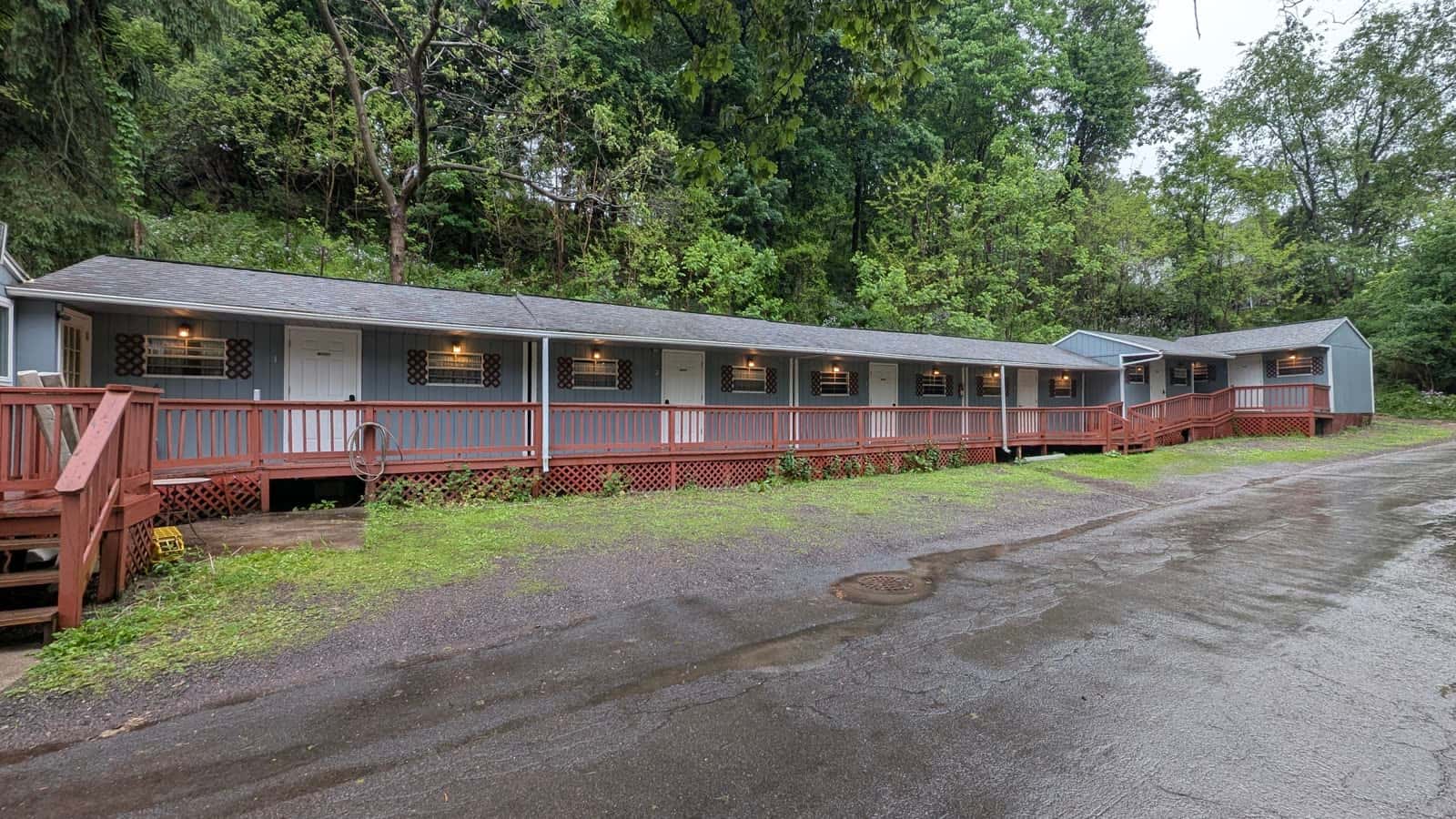
Our inn by the Frostburg rails works as the fixed point in any of these plans — beds from $79.79 nightly for a queen, taxes in, with check-in that works at whatever odd hour a train timetable hands you, since the door code arrives by text. Anchor the trip at tunnelhotel.com/book and let the transportation details flex around it.