Two corridors, one town
Railbiking vs. Riding a Rail-Trail
Frostburg is the rare place where you can pedal a former railroad and a working one in the same weekend. They sound alike. They feel nothing alike.
Railbiking · 6 min read ·
Same Ancestry, Different Animals
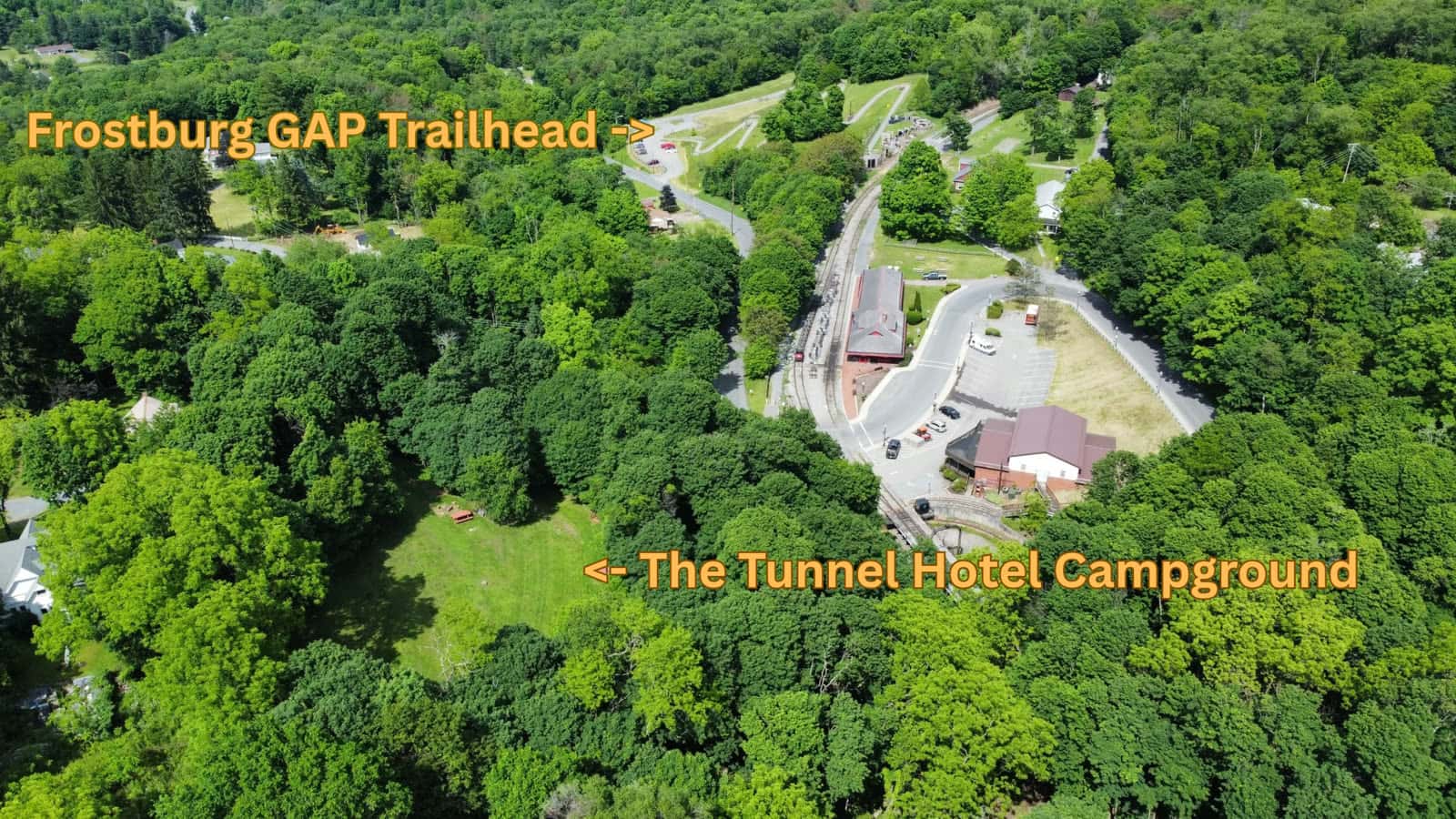
Both experiences descend from the same railroad boom. A rail-trail is a railroad that died and was reborn as a path — rails pulled, grade resurfaced, open to anyone with wheels or feet. A railbike ride is the opposite bet: the rails stayed, and you ride a purpose-built pedal vehicle directly on them. Depot Street in Frostburg happens to sit between the two, with the Great Allegheny Passage passing 300 yards from our porch and the railbike staging area next door at 19 Depot St.
Understanding the split helps you plan honestly. One is transportation you control completely; the other is an attraction with a departure time. Most visitors who try both come away preferring — both, for different moods.
The Rail-Trail Side: The Great Allegheny Passage
The GAP runs 150 miles of crushed limestone from Pittsburgh to Cumberland along the old grades, meaning it never gets steep and any sound bicycle handles it. It costs nothing to ride, opens whenever you wake up, and goes as far as your legs vote to go. From Frostburg you can roll toward the Eastern Continental Divide or drop the roughly 16 trail miles down to Cumberland, where the C&O Canal Towpath picks up for another 184.5 miles to Washington, DC.
No bike? Geared rentals from the outfitter next door run $25 for two hours or $40 for a full day. Our tunnelhotel.com/gap-trail-lodging page covers basing a trail trip here in detail.
The Railbike Side: Pedaling the Actual Rails
A railbike puts you on live railroad infrastructure a bicycle will never touch. Flanged wheels ride the steel itself, so the route includes what the railroad includes — the horseshoe sweep at Helmstetter's Curve, the bore of the Brush Tunnel, trestle-eye views over the hollows. You give up all navigation (the track is the map) and gain scenery that's otherwise off-limits.
The trade is structure. Rides depart on a schedule during a season that runs roughly May to October, follow a fixed out-and-back, and are priced per bike: the 1.5-hour Woodcock Hollow Express starts at $89 for a tandem, with longer trips at $99 and $119. The full menu lives at tunnelhotel.com/railbike-maryland.
Head to Head: How They Actually Differ
Here's the comparison we give guests deciding where to spend a single free afternoon:
- Freedom: the GAP is yours anytime, any distance, any direction. Railbikes run scheduled departures on a fixed route.
- Cost: trail riding is free (rentals from $25 for two hours); railbike trips start at $89 per tandem, split among its riders.
- Scenery access: only the railbike enters the working line's tunnel and curves; only the trail reaches the Divide and Cumberland.
- Effort: both follow railroad grades, so neither is steep — but you steer and balance a bicycle, while a railbike asks for pedaling and nothing else.
- Weather stakes: a wet trail ride is your gamble; a weather-canceled railbike ride is refunded in full or credited.
The Weekend That Takes Both
You don't have to choose, and the geography begs you not to. A clean two-day plan: arrive Friday evening, ride the GAP on Saturday — out to the Divide, or down the mountain to Cumberland and back — then take a Sunday railbike departure before heading home. Reverse it if your railbike time slot lands on Saturday. Either way you'll cover the same mountain from two different corridors and swear they were two different mountains.
Day riders with limited legs can compress it further: a morning trail spin on a $40 full-day rental, lunch in town, and an afternoon railbike run.
Base Camp Between the Corridors
One building serves both plans. Our 1888 railroad inn stands at 20 Depot St — next door to the railbike fleet, 300 yards from the GAP trailhead — with rooms from $79.79 a night, tax already in the price, plus bunk rooms and tent camping for bigger crews. Ride bookings and room nights share a single checkout, so build the double-corridor weekend in one pass at tunnelhotel.com/book.
Beds 300 yards off the trail
All rooms & camping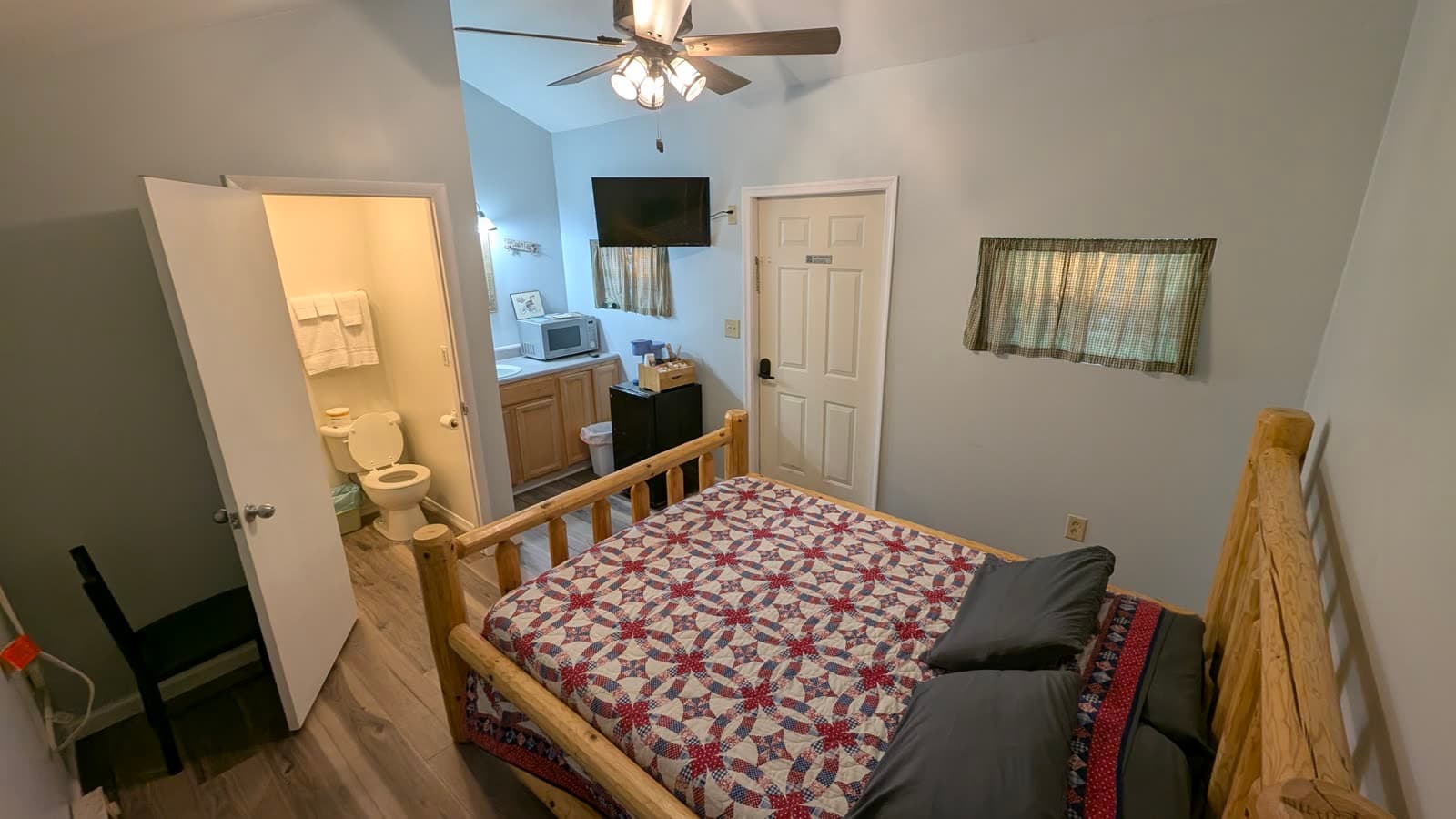
Tracks & Yaks, right next door
All experiences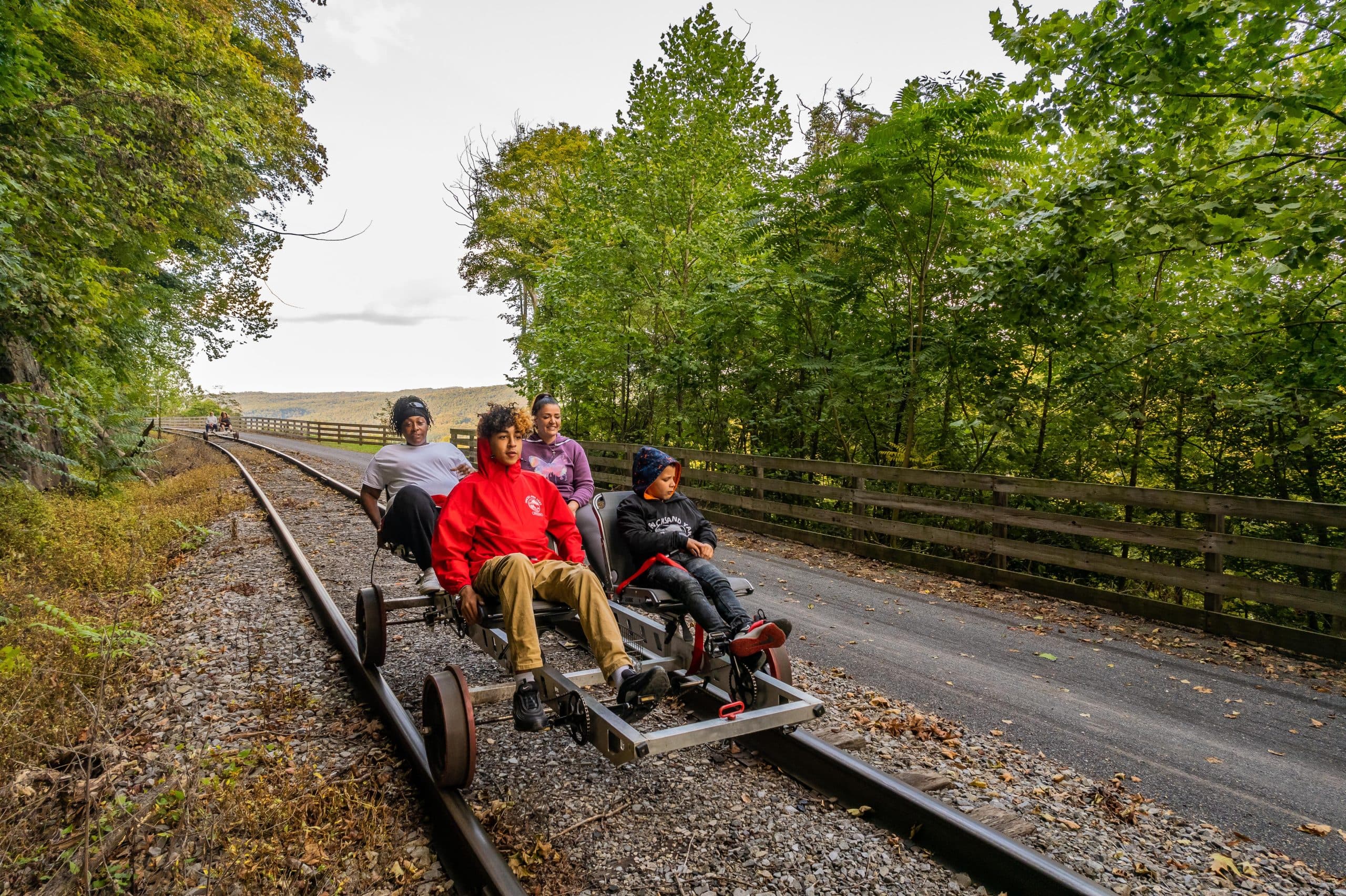
Woodcock Hollow Express
A 7-mile guided railbike run along the ridge line — the quick, scenic introduction to pedaling the rails.
from $89
Details →Geared Bicycle Rental — 2 Hour
A geared bicycle for two hours on the Great Allegheny Passage — go at your own pace.
from $25
Details →Geared Bicycle Rental — Full Day
A geared bicycle for the full day — explore the GAP from Frostburg in either direction.
from $40
Details →Questions, answered straight
Is railbiking the same as riding a rail-trail?
No. A rail-trail like the Great Allegheny Passage is a former railroad converted to a crushed-limestone path you ride on a regular bicycle, free, on your own schedule. Railbiking uses a pedal-powered rig with flanged wheels on intact railroad rails, on a scheduled, fixed-route trip priced per bike — from $89 for a tandem in Frostburg, MD.
Can you ride a regular bicycle on the railbike tracks?
No — the railbike line above Frostburg is working railroad track, and bicycles can't ride rails. Railbikes work because their flanged steel wheels are shaped to grip the rail. For a regular bike, use the Great Allegheny Passage, which passes 300 yards from The Tunnel Hotel; geared rentals cost $25 for two hours or $40 for a full day.
Which is cheaper, railbiking or riding the GAP trail?
The GAP trail is free to ride, so it wins on cost — even with a rental bike at $25 for two hours or $40 all day. Railbike trips are priced per bike: $89 for a tandem seating two on the 1.5-hour Woodcock Hollow Express, up to $119 for the 3-hour Mountain Ridge Rider. Split across four quad riders, railbiking starts near $35 a head.
Can you do a railbike ride and a GAP trail ride in the same weekend?
Yes, easily — in Frostburg, MD the two corridors sit about 300 yards apart. A common plan from The Tunnel Hotel (20 Depot St) is a GAP ride one day and a railbike departure the next; a compressed version fits a morning trail spin and an afternoon railbike into a single day. Rooms from $79.79 a night, tax included.