What Counts as the Quiet Season
By our porch count, the shoulder runs in two pieces: April, after Big Savage Tunnel typically reopens but before the ride operators start around May, and then the stretch from late October into November, after the machines wind down but before real winter shuts the summit again. Add in any weekday once school resumes in September and you've mapped the trail's low-traffic calendar.
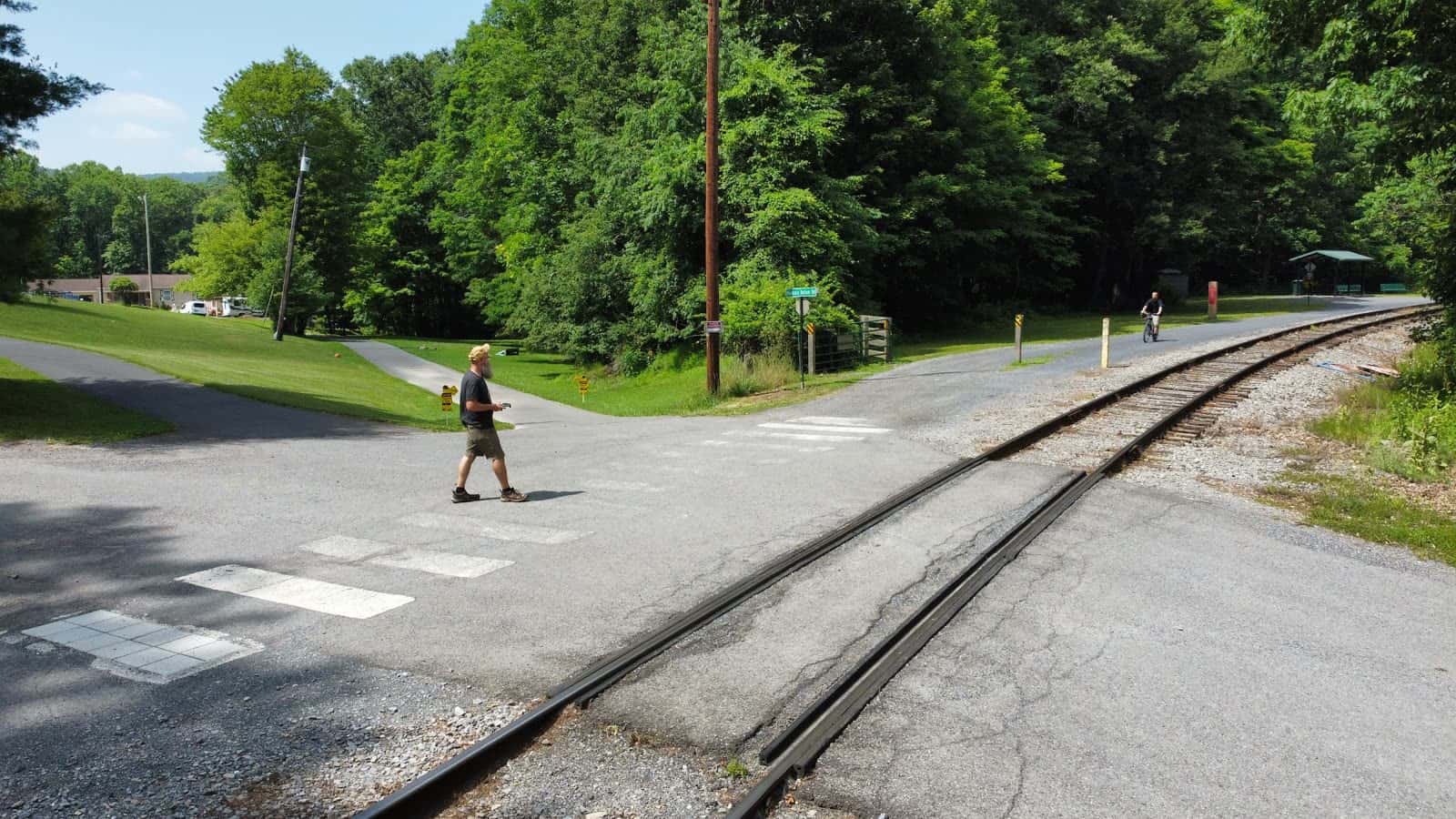
Why it happens is simple mechanics: when the railbikes and trains pause, the day-trip crowds pause with them — but the trail itself never went anywhere. Shoulder riders inherit 150 miles of graded, crushed-limestone corridor with the audience removed.
What the Empty Months Give You
The rewards are specific, not vague. Some are scenery, some are logistics, and one of them is money's favorite word: availability.
- A trail to yourself — hours can pass between encounters on a November weekday.
- Sightlines summer hides: bare trees expose rock cuts, valley views, and rail-era structure along the whole grade.
- First green in April, climbing the mountain a few hundred feet a day.
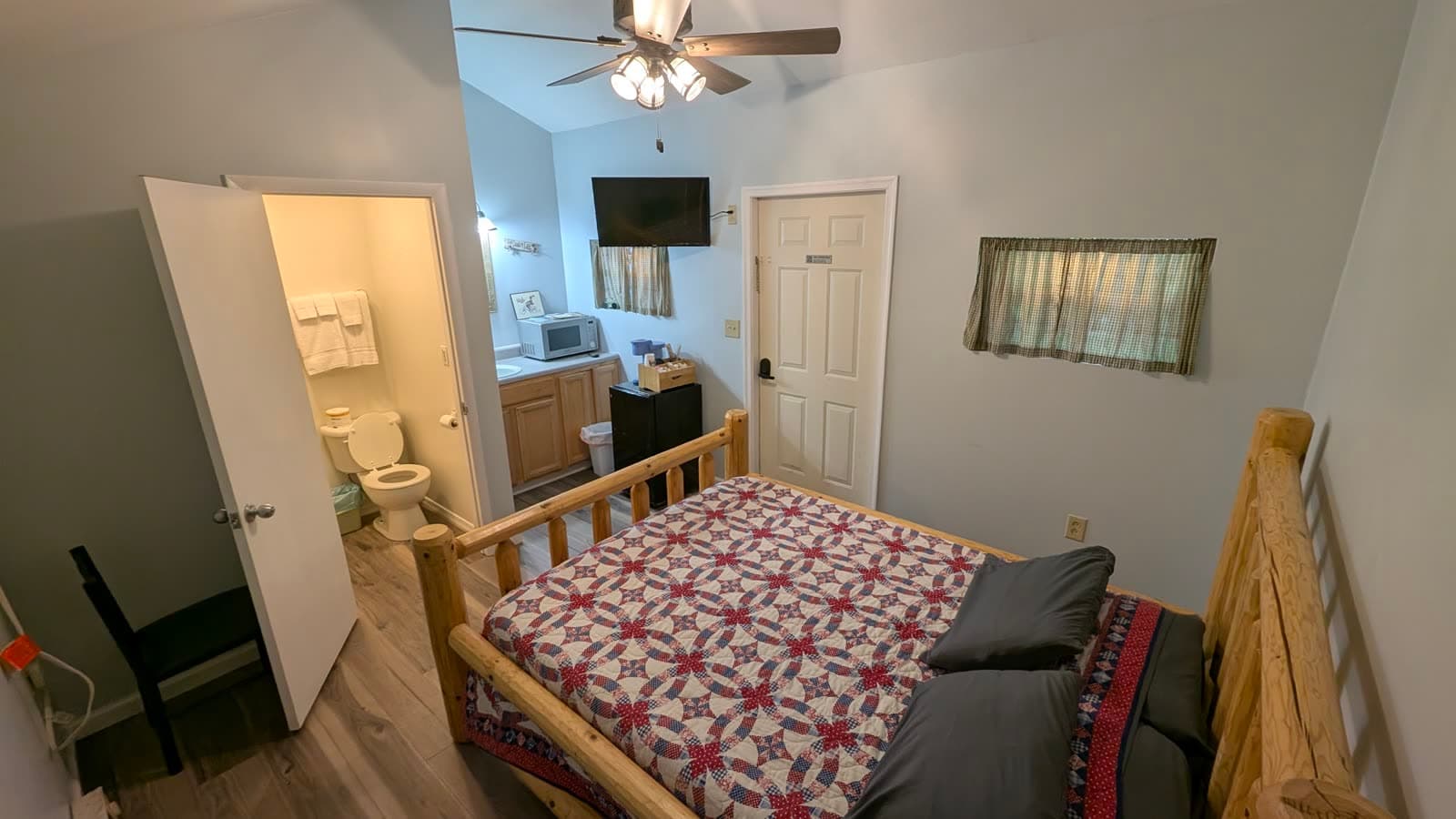
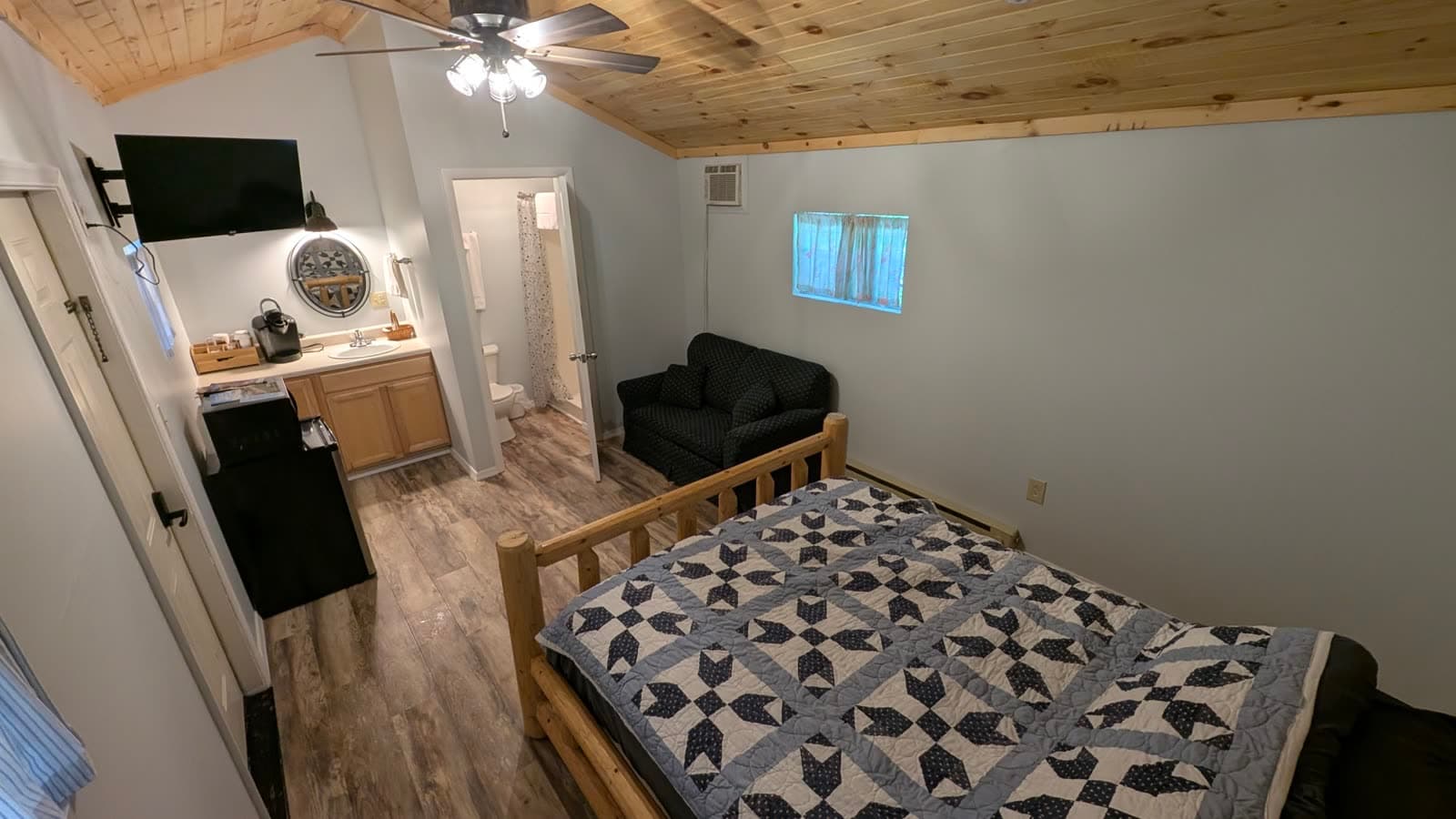
- Rooms on demand — the 1888 inn beside the trailhead rarely sells out a shoulder weekend, with queens from $79.79, tax inside the number.
- Cafe tables, deck seats, and pizza-oven attention without a wait.
What Closes, and When to Check
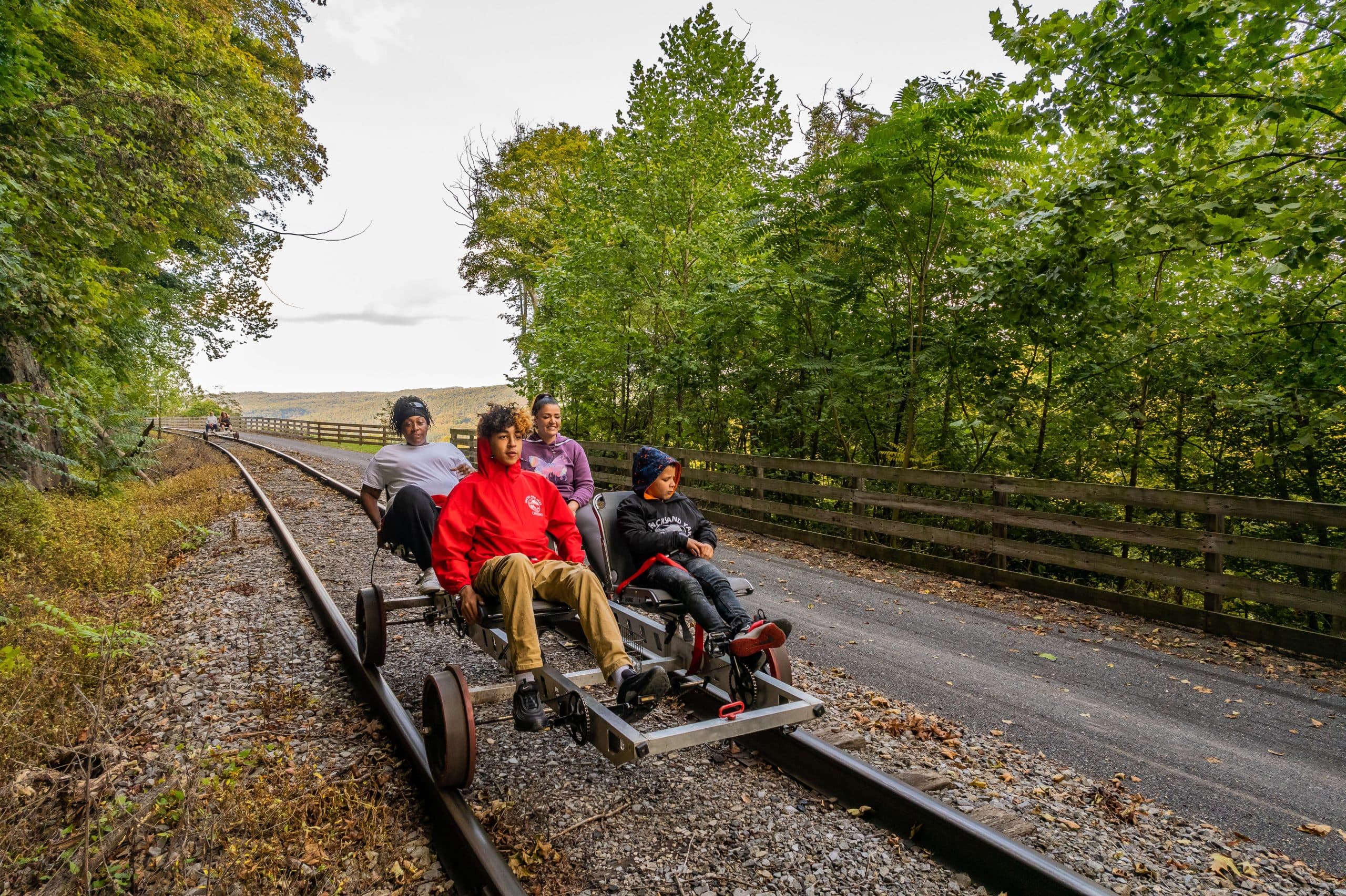
Three closures shape shoulder planning. Big Savage Tunnel, west of Frostburg at the top of the grade, typically gates for winter in late November and stays shut into early April. Tracks & Yaks wraps its railbike season around the end of October and resumes in spring. And the scenic railroad's calendar covers roughly May to October, Thursday through Sunday, so late-fall trips fall outside it.
None of those dates is fixed in stone — weather and maintenance move them year to year. Treat every one as a claim to verify the week you travel, starting with the tunnel; the checking routine is spelled out at tunnelhotel.com/blog/big-savage-tunnel-guide.
The Late-Season Tunnel Rule
Here's the rule that saves November trips: confirm Big Savage Tunnel's status before any ride that crosses the summit, because the closure date floats with the weather. And if you arrive to find it already gated, the trip isn't dead — point the bike the other way. The descent from Frostburg to Cumberland never touches the tunnel, drops sixteen trail miles through the bare-tree views, and climbs home at railroad grade. Some of our favorite riding all year happens on exactly that out-and-back in the first week of November.
Shoulder-Season Kit and Planning
Pack like the mountain might change its mind, because it typically does: layers over a single warm coat, gloves that still shift gears, and lights — shoulder daylight ends early and the corridor's cuts go dim before the sky does. Weather at elevation swings faster than the lowland forecast suggests, so check it the morning of, not the night before.
One logistics catch worth knowing: the rental fleet next door runs on the same May-to-October season as everything else, where a geared bike goes for $25 per two hours or $40 for a full day. In April and November, that counter is closed — bring your own bike for true shoulder riding.
Take the Trail While Nobody's Looking
Shoulder-season riding is a trade every quiet-lover should take once: fewer services, more trail. Beds at tunnelhotel.com/gap-trail-lodging stay open year-round with door codes sent by text, and reserving is nearly consequence-free out of season — 72 hours' notice returns every dollar. Pick a gray-gold week and book it at tunnelhotel.com/book.